What is Regenerative Medicine ?
Guest : Dr. Jeff Gross
november 15, 2025
Steve Washuta
Welcome to Trulyfit. Welcome to the Trulyfit podcast, where we interview experts in fitness and health to expand our wisdom and wealth. I'm your host. Steve Washuta, co founder of truly fit and author of fitness business 101 on today's episode, I speak with Dr Jeff Gross. He is a spine fellowship trained neurosurgeon who decided to go a different route which we are going to talk about. He is in what's called regenerative medicine. We go over exactly what that is. In his definition.
Steve Washuta
We talk about exosomes, PRP, stem cells, a host of different musculoskeletal issues, and how Dr gross deals with them. In his practice, we talk about the business side of his practice, how it works, comparatively speaking to, let's say, a general orthopedic office, it was a fantastic conversation. We really got into a little bit of everything from the science to the practical to what I call the patient experience. And anybody who is dealing with chronic issues, you have knee issues, you have joint issues, maybe something even more serious, and you're thinking surgery is not the answer for me.
Steve Washuta
Well, Dr gross might have some information that you want to hear. You can find more about Dr gross and his practice at re celebrate.com, or really, any of the social medias that are re celebrate, that's R, E, C, E, L, L, E, B, R, A, T, E, with no further ado, here's Dr gross and I. Dr gross, Jeff, welcome to the truly fit podcast. Can you give my listeners a little background on your credentials, what you do day to day, and then also talk us through why you made the switch from a more, let's say, traditional surgery, medicine, to exactly what you do now.
Dr. Jeff Gross
Great. Thank you for having me. It's great to talk to you and everyone listening. I'm here to spread educational value to options that you may not hear about in your regular doctor's visit. So I I'm a simple country spine fellowship trained neurosurgeon. I took care of 1000s and 1000s of patients with neck and back problems. In my earlier days, I did brain trauma, covering a trauma center, and, you know, I was always looking for ways not to do surgery on people's spines, so through hearing from patients that they didn't want that and seeing the outcomes and then sort of, you know, not really fitting in with the the, you know, the insurance driven push to do certain things the way they tell you to do them. I was always looking for alternatives.
Dr. Jeff Gross
And, you know, luckily, I'm, you know, a science nerd and have background in biochemistry, molecular cell biology. So therefore, when my patient said, How about stem cells? A million times, I finally listened, and about seven years ago, I decided to stop going to the annual, you know, neurosurgery meetings where a bunch of bow tie wearing guys pat themselves on the back for doing the same things year after year for 50, 6070, years,
Dr. Jeff Gross
I went to stem cell conferences and I re educated, retrained, retooled, because I wanted to add regenerative medicine in the stem cell field as a tool, additional tool For my patients, short of surgery, you know, maybe therapies weren't adequate, or injections or whatever, and they were still having issues, but they weren't bad enough for surgery, and they wanted to try something.
Dr. Jeff Gross
However, it opened my my mind, and I put down the Kool Aid. I found regenerative medicine, which which really dovetails with longevity medicine and health span medicine and anti aging and so many things, all the way through biohacking that this is, this is really where medicine should be going, and has the cutting edge options for people, and now It's almost all I do.
Steve Washuta
Could you give your definition of what regenerative medicine is exactly, and talk about all the different areas that it encompasses, all the different medical things that would go into it. And then also another question after this, do you ever think this could be a more carved out official niche? Do you think in 2045 you know, my son could be going to residency to do regenerative medicine.
Dr. Jeff Gross
Yeah, I'll answer the second one first, absolutely, this is a thing, and it will become a bigger thing, and it's carving out its own specialty. And the you know, as to the primary question regenerative medicine is tapping back into the body's innate, natural ability to create itself, to regenerate itself, to heal itself, but loses the efficiency of doing that with repetitive trauma. Trauma, with age, with other inflammatory damages at the cellular level, and seeks to reverse that back to a more healthy, youthful, restorative state.
Steve Washuta
What is a standard that I know your answer is going to be, there is no standard. But give me a few different standard musculoskeletal patient experiences that come to you are these people who have tried everything and now they're distraught and they're coming to you, or these people who are just maybe on their journey looking for options outside of surgery.
Dr. Jeff Gross
Some of both. Steve, I think the most common patient I see is someone who has joint problems. These problems are sometimes called osteoarthritis, degenerative joint disease. I hate that phrase, because it isn't really a disease, per se, but it's, you know, it's, it's a process. It's a biochemical process where the cells in the in the edges of the bone surrounding a joint can no longer support and create the cartilage and lubricate the joint, and then the joint degenerates in an inflamed way, and that's the word arthritis.
Dr. Jeff Gross
But most patients leave the doctor's office with the word arthritis on their brain, because that's what the doctor told them, and that's really just a short version of this metabolic process of the damage to those cells. That's the root cause we seek to unwind with regenerative approaches.
Dr. Jeff Gross
So someone looking to avoid a knee replacement might see me, a hip replacement, a shoulder replacement, somebody who's had maybe an old sports injury, maybe an arthroscopy surgery, which probably was well meaning and helped at the time, but does accelerate the need for additional treatment down the road, because it does. When you remove cartilage, it degenerates faster that joint. Let's
Steve Washuta
go into a little bit of the science, and then we'll backtrack to more patient experience. What exactly are exosomes? Can you define the difference between that and stem cells? How does this work from a mechanistic perspective,
Dr. Jeff Gross
when you look at regenerative medicine, it encompasses three main categories of things, and we call these things regenerative biologics. The most commonly known thing out there in the world is PRP, or platelet rich plasma. This is where you take your own blood, have it spawn in a centrifuge in a doctor's office, perhaps, and the platelet section of the tube of blood separated from the red cells and the plasma, which is sort of the watery substance in blood.
Dr. Jeff Gross
This this platelet level is just a little bit you can actually separate that out, and it's rich in growth factors and other things. I'll tell you those other things in a second, and you can re inject that back into an area like look tennis elbow, for example, it should suppress the inflammation and improve and accelerate the healing in that area. Of course, the older you are and the more inflamed and you know, degenerated your your blood cells and your platelets are, you know, the less effective it is.
Dr. Jeff Gross
And often you have to do it multiple times, interestingly, and I'll take a little pause here, all the regenerative medicine biologics are not yet approved for marketing claims by the FDA. Yet. PRP is ubiquitous. You can get it in most orthopedic and other offices, and even some health insurances are paying for them, not that that's a vote of confidence or credibility, because an insurance pays for them, but the bean counters at the insurance companies have figured out that it's cheaper than some of the more invasive procedures, like surgery.
Dr. Jeff Gross
So there's a move, I think, in the right direction here, where it's less expensive to have regenerative approaches than perhaps a surgery. So PRP is the low end of that. The next level up would be stem cells. And stem cells can come from two sources. Steven can come from your own body, but, you know, I'm 60, I don't want my 60 year old banged up inflamed cells have been exposed to, you know, eating McDonald's and as a kid and pop tarts and all kinds of things I shouldn't have had, and maybe sneak one still now and then.
Dr. Jeff Gross
But the there's a youthful source, and these are donated an ethical, moral way, by mothers having C section births. Congratulations, here's your baby. Good job. Hey, we were going to throw away your placenta, umbilical cord and amniotic fluid. Do you mind if we have it and they donate it? It's a true donation. There's no payment. So you know some myths out there that they're you know, Baby Baby harvesting or fetus harvesting is just not the case. At least here in the US, we go through official donor services.
Dr. Jeff Gross
These go to fda, certified labs where things are tested. Screened and and, you know, make quality assurances, and we, as a clinic, we acquire those so those products, so we can use those stem cells from the perinatal around the time of birth. They're very active, they're youthful. They haven't had a lifetime of bad behaviors or exposure to electromagnetic fields or whatever else causes our cells to be cranky.
Dr. Jeff Gross
Now we found out, and I'll go to the third and final element of regenerative biologics. We found out that stem cells aren't actually doing the work, and that might be a lot to chew right now, because people have heard the phrase stem cells, and we still use the phrase. Turns out, if we inject stem cells in your body, they're gone in short order, but the benefits last well beyond so those cells are imparting something onto our body, our cells.
Dr. Jeff Gross
Well, it turns out the stem cells are producing two kinds of signaling that our cells take in. The first one is growth factors and peptides that are outside the cell and bind cell receptors, and they influence what goes on in our cells. The other thing, probably more powerful, are what are called extracellular vesicles, little bubbles off of a stem cell about 1000 times smaller. So sometimes we call them nanoparticles.
Dr. Jeff Gross
And these vesicles, for cute or for fun, are called exosomes, EXO so M, E, S, and when you hear that all cells make exosomes, but stem cell derived exosomes are really regenerative, because they are doing the work of the stem cells. So you can skip the delivery mechanism the stem cells, and go right to the exosomes, and we like that. They travel through tissue better. They're less expensive, they're more abundant. They're usually derived from amniotic fluid and other methods. And that's really sort of the bleeding edge, the tip of the spear of regenerative medicine, and that's what we're using mostly.
Steve Washuta
Forgive my naivety here, but what if you were to just inject? Because I've read a study about this in the past. You know you can read a study about anything right, can prove anything right or wrong, but that even injecting, let's say something that's like inert but still has like fluidity, like a saline in inter articularly can still help, because you're just like creating fluidity in the area, as opposed to there being like a healing mechanism. Is there any truth to that, or is that not the case? Yeah,
Dr. Jeff Gross
no, you can. You can inject fluid into a joint, and intra articular into a joint, like you said, and it it improves the space and some of the lubrication, temporarily, you can get even more liquidity in the joint, or fluidity in the joint if you inject a lubricant like hyaluronic acid and all the brand names that go with that, which is something our bodies make. And you can go into your orthopedic office and they'll do a series of three of those, and that can help on a temporary basis. There's nothing wrong with that. It's not treating the root cause. It's treating the symptom. It's the tin man. You're lubricating the joints so the tin man can move.
Steve Washuta
Okay, that makes sense. So it is helpful, in a sense, maybe it will, from a pain perspective, help delay the problem, but it's not actually healing, as if the exosomes would correct. Okay, that that makes sense. Now, I guess. Let's just get into some of the other medicine and maybe just compare all of them. What would be cases in which you would do, like a medial branch block, as opposed to intraarticular injection, as opposed to, you know what you do with PRP, as opposed to exosomes, like, what? How do you make the decision on which one you're going to use, as opposed to, like, a regular orthopedic
Dr. Jeff Gross
I, of course, everyone's individual, but I'm, I'm a, I want to be a one and done efficient guy, so I'm not using PRP. You can use PRP. There's nothing wrong with it. I'm not even using stem cells that often. I'm going right to the stem cell derived exosomes with the growth factors.
Dr. Jeff Gross
So basically a filtered screen tested amniotic fluid, we have found, and actually others that came before me, have found with long term follow up in Europe, and most of the good data comes from other countries, because we're late to the party here in the US, have found that injecting intra articular in the joint is not great, and injecting the actual cells that produce cartilage to reactivate them, is the superior way to go.
Dr. Jeff Gross
The best study is a 15 year follow up French study using knees. They injected half the knees with in the joint and half the knees in the bone edge. Edge. Yes, the bone injection above and below the joint adjacent to the cartilage surface, and the results were significantly superior, longer lasting and better results injecting the bone edge.
Dr. Jeff Gross
Why is that? The science is that the cells that make and maintain cartilage, create cartilage, make the proteins of cartilage and lubricate the cartilage are in the bone. They're in the old growth plate that created the joint in the first place. We're turning back to the factory, and the results were quite significant, and some studies out there actually suggest that intra articular regenerative injections are short lived, and that's my experience too.
Dr. Jeff Gross
So I don't even do much in the intra articular space with the regeneratives. We do sometimes some anti inflammatory biomolecules in the in that space to calm it down, but that's just an add on. The ultimate work is coming from the bone cells called chondrocytes, cartilage forming cells.
Steve Washuta
It sounds really interesting. But also, as a self proclaimed wuss, that sounds extremely painful. Can you tell me, like, if you're going to do that Intraosseous, right? Is that? We call it, if you're going to go about that process? How? I mean, do you put me out completely? How is that? How does that process go?
Dr. Jeff Gross
We do put patients under Twilight sedation. It's not full anesthesia, but they don't feel it. It takes me very little time to do the hard work is targeting. So this is done ahead of time. We get a very high quality MRI of the the joint affected three tesla MRI, which is in the community, is one of the higher, higher strength magnets, giving you better quality pictures.
Dr. Jeff Gross
As if you went to your big box store to get a new television for your house, you want to get a 4k Ultra HD for the best picture, so you can watch the game, you know? So this is the same thing we do with MRIs. It's, it's can't be an open MRI, no no cheap screening MRIs. This has the real deal, and we order it with some additional bells and whistles off the secret menu. It does not cost more, but you have to know to order it, and it's not standard.
Dr. Jeff Gross
And based on that, we can see the actual inflammatory damage and changes in the bone, and that's my target, and we inject under fluoroscopy, which is x ray in the surgical suite, under sterile conditions, and the anesthesiologist gives you a little sedation, the same sedation as if you're having a colonoscopy. Steven may be too young, I've never had one, but it's just a little Twilight.
Dr. Jeff Gross
And then my part, then, is straightforward, and we inject these exosome type biologics into those targeted areas, and typically it takes six to 12 months to see the type of results that we hope for. And we do have wonderful examples of MRIs a year later showing increase in the thickness of the cartilage surrounding involved in that joint.
Steve Washuta
Sounds almost a little bit like interventional radiology, insofar as you know what you have to look at and do. Can you tell me how small that target area is?
Dr. Jeff Gross
It varies. It depends on the MRI and the pain. Sometimes people come in with a knee problem, and it's one little spot, sometimes it's five spots in the knee. So we make it precise and customize and individualize for that person we want to get the best result, and that requires not treating everyone the same like a health insurance company wants to
Steve Washuta
you keep saying we so I'm just wondering, are you the only one who does this, or do you have other trained physicians underneath you? I imagine this takes a little while to get accustomed to, given that it's not, you know, traditional
Dr. Jeff Gross
Well, I'm a surgeon, so doing an injection is kind of the simplest thing I might do procedurally. But I don't have anybody else doing these in my practice, but there are others doing them here in the US, we have a group, a loose group of us called the therapeutic, regenerative, exosome group, that meet and discuss these things. So we share these ideas.
Dr. Jeff Gross
We talk about different approaches and different things we're helping to address or creating options for people that want to avoid something more open, more invasive, perhaps more risky. Some people aren't even candidates for surgery. At times, we treat a wide variety of age groups, from high school athletes all the way up to octogenarians and more.
Steve Washuta
Do you think this is and maybe it is, and I'm just naive to this is going to start to become more of the norm, let's say, in, like, professional sports and things of that nature. You know, I see these athletes. This just happened, right? One of the best defensive ends got traded, and I think the reason why is because he had, like, an l4 l5 facet joint issue reoccurring, right? It's a young guy.
Steve Washuta
He's getting pushed. Rushed into extension by 330, pounds, six, six guys who are the strongest guys in the world, that's just probably can't hold up over time. And what do they do for him? They give him medial branch blocks or something, and they just say, go play. It just gets worse and worse. Like, why aren't NFL teams doing this?
Dr. Jeff Gross
Well, they are. You don't hear as much about it, because they have to be quiet about it. They don't want an unfair advantage. Some of the regenerative biologics are actually banned by the Amateur Athletic associations and things. So it's it's very quiet. You hear about some people who, 20 years ago, went to Europe for this, right? You had Peyton Manning and Tiger Woods, and I think even Kobe Bryant went and got some regenerative biologics.
Dr. Jeff Gross
They used to call it stem cells at that time. But really, remember, the stem cells are delivering the exosomes and the growth factors. So you're getting the best of everything with the with the amniotic fluid. It's it's there. You're just not hearing about it.
Dr. Jeff Gross
You know, here I'm based in Las Vegas, Nevada. Even though most of my patients come from all over the country, most of what we do is remote. But in the summer, we have something here called the Summer League. The NBA players are here, and we do treat some of them, but they're we're under we can't share names or anything. They don't want their trainers to know. So it's happening. It's out there.
Steve Washuta
You pick any musculoskeletal injury that that you feel like picking, walk me through the entire patient process, right? Let's say it's Steve. I have this issue. You know? I come, I book an appointment, I sit down in your office, from us sitting down to, let's say, the recovery process. How does that go? Yeah,
Dr. Jeff Gross
well, you wouldn't come for that unless you lived here in Las Vegas, we would start like we're doing now, by video. And one of the, you know, good things that came out of covid is telemedicine is very robust. You can do a lot of things. I do need to examine you at some point, because I the art of medicine requires me to, you know, test your your your parts, right? So the low hanging fruit would be knees, because I think there's the most research on knees.
Dr. Jeff Gross
They are most commonly problematic from a joint perspective. And they have a wonderful surface area, which that broad surf, flat surface area tends to be better mechanically for the type of results we see. So they get better faster than, let's say, a ball and socket joint, a hip or a shoulder. But we do all kinds of joints. So you say, I've got a knee issue, I'd say, Okay, tell me about your lifestyle. We start with the basics.
Dr. Jeff Gross
What's your exercise like? What's your diet? How's your sleep? What's your supplements? Do you do any hormesis, hot sauna, cold plunge, fasting. You know, we want to suppress inflammatory burden throughout your body. You know, are you doing any peptides? We start with the basis. We're not going to jump to the regeneratives. I ask if you've had an MRI, and if it's a decent one, we try to get it ahead of time. We have it sent here digitally, or you can mail us a disc, which is a little old school, but we still do it.
Dr. Jeff Gross
And I can pop up the MRI on my screen, share it with you, show you what I see. Try to match it up with the specific areas where you might have pain or dysfunction. Make sure you've tried everything else first. And then if you if you need a better MRI, we help you get one and look at that. And then if you're a candidate, we invite you here to Las Vegas on a procedure day. People come, take a few days, see a show, have a nice meal and have a joint procedure. So that's that's pretty much how it's done.
Dr. Jeff Gross
And then I talked to people at one week, one month, two months, every other month for at least a year. And we follow you out and make sure you're doing great. There's no downtime, so you can be right back at your program, physical therapy, program, training. You're sore for about a week, but that's not a restriction. If you need to go easy for a week, you go easy for a week. But other than that, we want you right back at it. We might stack with some cartilage forming peptides, Wolverine stack, if you know what that is, and a new peptide, new ish called cartilage, which is a cartilage anabolic
Steve Washuta
are all the peptides. Doesn't need to be like injected site specific, right? These, these are just the
Dr. Jeff Gross
they need to be injected to get the most benefit. Although there are oral forms and new oral forms that are liposomal, that might have more benefit, but they do not need to be injected near the joint. That is, it's myth. It doesn't work that way. Wherever you inject it, it's taken up by your capillaries, goes into your bloodstream, is pumped throughout your body,
Steve Washuta
and they're not intramuscular, correct?
Dr. Jeff Gross
I don't do peptides intramuscular. That doesn't make sense to me. We want a constant available. Supply, which requires the subcutaneous injection, very tiny needle, like insulin, that you just do, into a little pinch of subcutaneous fat. Very simple.
Steve Washuta
Now let's talk about maybe the sort of insurance end. Do they cover anything here? Are there like HSA plans? How exactly does that go? About
Dr. Jeff Gross
HSAs, flexible spending accounts. You have control of those dollars. We can use those but generally insurance will not pay and they use the reasoning is, usually this is not yet approved for marketing claims by the FDA, so we're very compliant with that. We don't make any marketing claims that we can cure or treat a disease or condition.
Dr. Jeff Gross
But as a surgeon, I I never guaranteed anything. Anyway. Surgery has its risks, so it doesn't really change anything. We're just very careful about making sure people understand all their options, from surgery all the way down to live with it and in between. And one way I protect my patients and stay within my Hippocratic Oath is to make these helpful things available to them as an option so but insurance generally does not cover it.
Dr. Jeff Gross
But the exosomes have brought down the cost of the procedures, the injections, so they're not too bad. So all in with the surgery center and the sedation, you know, if you did two injections, let's say it's a medial compartment of the knee, you might be looking at $8,000 if it's five spots in the knee you're looking at, you know, close to twice that it just depends on what you need. Yeah,
Steve Washuta
and these costs aren't in a vacuum, right? A person can't sit down and be like, well, if I do this, it costs 8000 if I do the other thing, my insurance covers it, and cost five it's like, Well, are you going to be back, you know, in the hospital, you know, back on a surgery table two years later, because it didn't work, right there. There are other factors that come in with this.
Steve Washuta
I think that people need to sit down and think, right, you're not just comparing the dollar amounts. You have to look at the procedures. And, like you said, if you're if you're up and running, not literally, but almost literally, within a week later, post, you know, intervention, as opposed to this other surgical thing that could have ramifications that leave you lying in bed for two weeks. I mean, there's big differences
Dr. Jeff Gross
there. Oh yeah, you got lost work, maybe lost income associated with that. You've got the risks of surgery. You've got associated costs with the recovery and other treatments you may need related to that, of course, and every individual has to make good decisions and have a doctor or clinician kind of go over help them weigh those decisions. That's the informed consent process is to educate and help someone make a decision, but they have to make it themselves.
Steve Washuta
From a practice perspective, would it actually be a disadvantage or a pain? Let's say tomorrow you woke up, Dr Jeff and the insurance model decided to cover all this. They go, You know what? We have enough research. Boom, it's all covered. Would that actually be beneficial, or do you think in some ways, that could be sort of deleterious to to the process that you that you run your model in?
Dr. Jeff Gross
It's a great question, and insurance is notorious for approving something but then not paying for it. People walk into my office all the time saying, I have great insurance. It's great until they ask them to pay for something, and then when you find out they're not paying but a small fraction of it, it's actually more of a hassle than not so because
Steve Washuta
now you have to hire two other people to have this back and forth between front desk and insurance company, and then they go, we're going to pay you, but six months from now, and then you have to track all of that money that's not just in the account, it's pending. And I just, I imagine that there could be a headache with that.
Steve Washuta
There could be, yeah, agree now, talk me through. I guess I know you mentioned it in the very beginning, but it seems like a big jump for you know, an orthopedic surgeon, to take right? Somebody who goes to school, you spend all this time. You have your job, you're making good money. I get it. You're sometimes you're on call, there's there's stressors, there's things, but for you to jump ship from that seems like that. That's not, that's not something a lot of people do.
Dr. Jeff Gross
I didn't jump ship. I evolved. I think that we as physicians need to help push our specialty and the field of medicine forward, and we need to take on new and improved ideas and not sit on the laurels. You know, spine surgery hasn't evolved in 60 or 70 years. We are still doing the exact two things that existed. You know, before the.
Dr. Jeff Gross
Advent of CAT scans. We do opening of the spine, called decompression. We do fusion of the spine, maybe a combination of those two. Yes, there's a new approach, a new bell and whistle, a new hardware, a new thing to insert. It's the same thing. It's not evolving. So how can these intelligent people who spent years training and and maintain the blinders on. I think, I think doctors that do the same thing for decades, not seeing what's around them, new and changing or coming, and latching on to that and being part of it, are actually doing their patients a disservice.
Steve Washuta
Do you think it's a little bit of an educational issue. Meaning, is it because these blinders are on, because they're so specific to just doing the surgery? You know, I know a lot of surgeons who do do the surgery, and then basically, they don't even see the patient if there's not a problem, if there's not, if there's if the patient doesn't come back to the office, right?
Steve Washuta
The follow up might be with the PA, and then maybe that person moves, right? Maybe that person has to move to Arkansas from Texas, and they never see them again. But there was a problem with the surgery, and they don't even know that there was
Dr. Jeff Gross
a problem, right? Yeah. I mean, they're just technicians. It's like having your oil changed in your car. They don't after you drive away, they don't care. They they made their money. They're done. It's, it's it's disgusting. The the part of it is institutional, the government, the regulations, the national organizations foster not no changes.
Dr. Jeff Gross
They don't want things to change. They like it just where it is. Big Pharma, big implant companies, multi billion dollar companies want it just like it is so their feet, they're feeding the Kool Aid and that, and that Kool Aid gets consumed and consumed. So yeah, I had to, had to have a step out of body to look back at that and say this.
Dr. Jeff Gross
This isn't what I signed up for. This isn't why I worked so hard in college and medical school and did seven years of residency and fellowship like you said, covering trauma centers, staying up all night, doing that hard work to just do the same old thing for 30 to 40 years, when things are evolving all around us, particularly in other countries. Our patients here in this country deserve access to these cutting edge, helpful, less invasive, perhaps less risky, alternatives, I said, perhaps only to be compliant.
Steve Washuta
You are now the head of the previously talked about program, MediCal program, and you need to design this Regenerative Medicine Residency Program. What are people studying? What should you know if you could go back in time almost, what would have helped you get into this so that you didn't have to do so much due diligence that you could have already known?
Dr. Jeff Gross
I think we all need to do the due diligence anyway, and that would be part of the curriculum, but it would probably, right now, be a one year add on for different specialties, if you're a urologist or if you're a breast surgeon, or whatever you can do a one year in regenerative medicine and add those tools and evolve. You know, there's so many things for approaching cancer, for approaching other systems of the body.
Dr. Jeff Gross
Yes, I'm focused on musculoskeletal but I do other things because I came from the musculoskeletal side. I'm a spine guy, even though I do more joints now than spine. But we see people with nervous system problems. We see people recovering from heart attack and stroke, and these biologics have been shown to have benefits. There's good science behind all this. We're not shooting from the hip here. We're not just trying stem cells or exosomes for something, unless there's some background, some root cause analysis, some biochemistry that supports it.
Steve Washuta
Are there other countries or other areas that are even further than, let's say we are, as in so far as like it being an accepted practice?
Dr. Jeff Gross
Yeah, I mean, China and Korea are ahead of us. A lot of the ideas that we're employing, employing come from Asia, also Eastern Europe, Russia. They've been doing a lot of these things quietly for a long time. Fact, a lot of the peptide stuff coming out now has been in Russia for years, but they weren't sharing.
Steve Washuta
Yeah, the peptide stuff is fascinating. It's something that's come across my industry a lot. I don't know a lot about it. I'm a little bit hesitant. I've tried to do my research on it. I just don't know how long they've been out all of these peptides, because it seems like some peptides were invented yesterday, and some peptides have been around for, you know, 45 years.
Steve Washuta
So to me, it's a little bit confusing as to what, which, you know, when you group everything together, oh, it's a peptide. Well, it's like, well, do I want to take the original OG peptide we have 30 years of study on, or the peptide that was invented, you know, yesterday. So, like, how what should we be looking into? With peptides to make sure that we're, we're being, you know, safe and hedging our bets here.
Dr. Jeff Gross
Well, you look, look at the research, you know, go to PubMed, see what's out there. Some like you said, some of them have been around a long time. Some of them we make naturally, and with age, they decline, just like our hormone levels might, and may benefit from some replacement. So peptides can be used strategically, just like regenerative medicine, for example, for musculoskeletal health.
Dr. Jeff Gross
We love the BPC, 157 and the TB, 500 usually together, and that together is most, most of the Wolverine stack, which is to help you heal. And it's amazing, you know, we, we just took the grandkids to Disneyland. I'll admit, this is not necessarily a plug for Disneyland, but we spent days. 25,000 steps a day was our best day. So, you know, really hoofing it through Disneyland, and at the end of the day after, you know, 12 hours on our feet.
Dr. Jeff Gross
You know, we did, my wife and I did BPC, 157 TB, 500 and we felt great. We had no soreness on our feet. We could full energy go the next day, recovered from that without any issues. I without that, I know I would be paying for it. So in a good way, it's a good workout. But we were, you know, ready to go the next day. Some of our kids were more tired than we were.
Steve Washuta
So is the protocol for these peptides to use as needed, as opposed to in advance or on some sort of like routine schedule? How does it work?
Dr. Jeff Gross
It just depends on what your goals are. You know, for musculoskeletal issues, I use them strategically for needs, like as needed, perhaps, or in stacking with a procedure, I saw someone, however, yesterday with chronic low back problem, and they said, let's try it. Even though it's a chronic issue, let's try it a cycle, you know, a four to six week cycle of of musculoskeletal peptides.
Dr. Jeff Gross
Because sometimes it's just enough to suppress the inflammation and improve the pain, enough to keep them away from some invasive procedure. It's not necessarily going to cure it in that setting, although an acute injury, like a tennis elbow or something or you fall and bruise a rib off your bicycle from cycling, it'll it'll tend to heal faster. That's my observation. That's not a claim, yeah.
Steve Washuta
Well, I could even see, you know, the counter too, is that even if it's not going to heal it right away, the last thing you want is for the patient to become deconditioned in a mobile right? Because now there's other issues coming down the road. So if I can get you up and moving, you know, we can make sure that there's other practical health benefits to that, and even if it doesn't heal that particular area, which which the mobility in and of itself might right.
Steve Washuta
The reason that issue might be a chronic lumbar issue is because, actually, your glutes are really weak, and you haven't been walking right. And now, now we can get you up and moving, and we're strengthening the area in and around it, taking pressure off that area. Yeah.
Dr. Jeff Gross
And if I'm not clear, we always want to match this with lifestyle management. You can't just sit on the couch and let the peptides do the work. You have to do the work. You have to use your muscles. And this will this will help. Now that's just spot treating musculoskeletal stuff. We have peptides like glps agonist that are not only for weight loss and for management of insulin resistance, but have shown long term anti inflammatory benefits by suppressing the sugar damage inside the cell, which is cytotoxic, cell toxic.
Dr. Jeff Gross
So we are using low doses of that to suppress inflammation and and get the same results we see in those studies, reduce, reduce the exposure to pro inflammatory disease, forming cell activities. So we see that as a longevity move. There are many others. I'm just scratching the surface here to give you a little taste.
Steve Washuta
I get the feeling, Dr Jeff, you're a bit of a problem solver in all the best of
Dr. Jeff Gross
ways, right? We try, right? That's what we're supposed to do as physicians. Yeah?
Steve Washuta
Well, I say that again in all the best of ways and meaning, because I can see that you're going into different areas outside of just the areas that you were initially studying. What is something else that you believe is on the horizon, either in your practice or maybe just in your personal life, that in the medical space that you've been investigating or looking into, and think that some of this regenerative medicine can help, or that you're just intrigued about researching.
Dr. Jeff Gross
I love it. This is like open mic. I get to go for it. Okay. Thank you. So currently we have not only the use of the regenerative biologics for the musculoskeletal health, we do it for people with inflammatory problems like autoimmune issues, to help them with that. We also help people with chronic inflammatory damage, like long covid or.
Dr. Jeff Gross
Some other infections, Lyme disease, we help people that are recovering from a neurodegenerative or neuroinflammatory problem. Ms, Alzheimer's disease has an inflammatory component too, recovery from stroke and acute injury, traumatic brain injury, for example, deconditioning. And then I have sweet little old lady who comes to my practice, she has osteoarthritis and can't do her crafts. She's over 80. Once a year, she gets an exosome infusion, and she can feel better, use her hands, sleep better.
Dr. Jeff Gross
We had one woman with chronic bronchitis who became oxygen dependent. Had to carry around the little tank so she wasn't leaving the house, as much becoming less active, we did a single inhalation of the of the regenerative biologics. She's now off oxygen so she can get out of the house easier. So different things. We also have some cosmetic and and topical things we have and then and then we are also have access to something called natural killer cell exosomes.
Dr. Jeff Gross
Natural killer cell is part of the immune system and the natural killer cells in our body. Their job is to remove abnormal cells selectively, like infected cells, like senescent zombie cells, like cancer cells, and yes, during our lifetime, we make cancer cells, and they get removed by this natural killer cell system. So natural killer cells work by having their very specific exosomes kill that cell, and those exosomes have some enzymes that get into the cell and burst it open.
Dr. Jeff Gross
It's called cell lysis. So we finally got our hands on some of those earlier this year, these natural killer cell exosomes, and we are offering those to cancer patients as an alternative or an adjunct. We also have some results in injecting solid tumors with them and having the tumors shrink. So we have some experience there, and that goes along with some significant research behind it. Additionally, plants make exosomes.
Dr. Jeff Gross
Steve, so the way plants deliver their phytonutrients are by encapsulating them in this little exosome and when we eat them, they survive our GI tract, our gastrointestinal tract, get into our bloodstream, survive the bloodstream, and get into our cells to deliver that phytonutrient. Phytonutrient is a plant nutrient, you know, like resveratrol, quercetin, vitamin C, a lot of B vitamins. These are all things that come from plants naturally instead of synthetically.
Dr. Jeff Gross
For example, some vitamins get better absorption if they're liposomal, and a liposome is a synthetic exosome, but nature's already figured this out, so we came up with an anti aging product from organic Italian fruits, where we now have a lab in Italy that will extract the exosomes in a single daily capsule, so you can get rid of a handful of other pills and capsules and supplements, and just take one of these and get significant phytonutrient delivery, and it survives the process of getting it into the cell. Even better.
Dr. Jeff Gross
You had a guest on not terribly long ago talking about telomerase. And, you know, they have these new you know, they've identified plants that make natural telomerase supporters to help our you know, telomeres in our cells, and we are working on a version of that that will be exosomal, direct from the plant that should have an absorption, cellular absorption, improvement of 700 or 4500 times the existing supplement.
Steve Washuta
Yeah, I also had a guest on who was talking about glutathione, who has a glutathione supplement, specifically the delivery methods, just as you're talking about the difference between taking something like that orally and how it's broken down, as opposed to getting it liposomally, as opposed to getting it, you know, whatever, right, transdermally, all these different ways. And people don't think about that, right? They, you know, they you read the ingredient, you know, you buy some supplement over the, you know, over the counter on Amazon for $40 so you look what I'm getting, little do you know, once it goes into your body, you're not getting any of that at that point, correct?
Dr. Jeff Gross
You're getting de minimis amounts to your cell where you need it. So we have solutions for that, liposomal, exosomal, naturally, and peptides are challenging. Why do you inject peptides? Because they get digested in the tract. So some people now have different oral delivery methods, or dissolving strips in the mouth that get it right into the bloodstream with some improvement, but not as good as the injectable.
Steve Washuta
Are those NK cells measurable? Can you get a blood test and find out how many you have? Is like a like a leukocyte?
Dr. Jeff Gross
Yep, there are different ways to do it. The NK cells have a particular CD marker, a cell surface marker, and there's. An analysis for that. It's not a standard test. It's probably a little pricey, but there was a wonderful study that you just caused me to mention. This is before they have the exosomes.
Dr. Jeff Gross
They just had natural killer cells. They took patients, they gave them natural killer cells, and these are rather healthy people, and they looked at their age marker from senescent cells, and the marker is called beta galactosidase. It's an enzyme that's leaked from these these zombie cells. And the more of these zombie cells you are, the more biologically older you are. And it trends with age. So they were able to give these patients some natural killer cells.
Dr. Jeff Gross
Their beta galactosidase went down for up to two years after a single infusion. So the that's an age marker that was reduced. So they're reducing the effect of biological age of these people by improving their natural killer cell system. So that is exciting to me. That means it's also an anti aging approach. We're not doing it for that right now, because I have such a limited supply, I want to save it for my cancer. People with cancer diagnoses first.
Steve Washuta
Can you go into unless I missed it? How they get those cells? You said you have a limited supply. Is it because of the fact they're just difficult to extract?
Dr. Jeff Gross
Yeah, natural killer cells are maybe 1% of your blood cells in general. And then to derive the exosomes from those, you have to accumulate quite a few natural killer cells, maybe in a culture, you know, in an incubator, and then have those cells make the exosomes. And you have to concentrate enough of them, so it's difficult. So we actually get those from Europe.
Dr. Jeff Gross
We haven't been able to find a lab here in the US yet that has them, but it's we have enough of them to help people with an option if they want it for cancer. In the future, there will be more ways to scale the production and use them for anti aging purposes, anti inflammation purposes, tumor reduction. If you wanted to perhaps you're at risk for cancer, maybe you have a certain genetic marker you want to reduce the risk. Or maybe you were treated for cancer and you're in remission, but want to do something active besides exercise and eat, right?
Dr. Jeff Gross
And think good thoughts so that that's something you ask also, what else is coming in? And we are about to source some thing called Muse cells, M, U, S, E, it's a subset of stem cells that are even more powerful than traditional, available Muse stem cells, and we're using these for different approaches, both in the musculoskeletal system, for other health and they're very popular now because the Kardashians went and got some Muse cells somewhere. So it's coming.
Steve Washuta
Well, sounds like, if any listeners know how to synthetically recreate more NK cells, that's that's how you retire early. So, yes, this has been fantastic information. Dr, Jeff, can you let my listeners and audience know a little bit more about where they can find your website, about re celebrate, and anything else you have to point towards? Yeah,
Dr. Jeff Gross
thank you so much. So our company is re celebrate, because we're celebrating the renewal of your cells, and that's R, E, C, E, L, L, E, B, R, A, T, E, and I think we we created that word, and we corner the internet on that word. So re celebrate.com. Is our website at re celebrate is our handle on most social medias. So you can look us up there. Reach out. We always like to meet new people. If you have something you want to talk about, you have a problem that hasn't been figured out or or been able to be fixed, we would love to talk to you and see if we can try to help you. I'll
Steve Washuta
put all the links in the description. My guest today has been Dr Jeff Gross with recelibrate. Thank you for joining the Trulyfit podcast. Thank you Thanks for joining us on The truly fit podcast. Please subscribe, rate and review on your listening platform, and feel free to email us. We'd love to hear from you social@trulyfit.app. Thanks again.
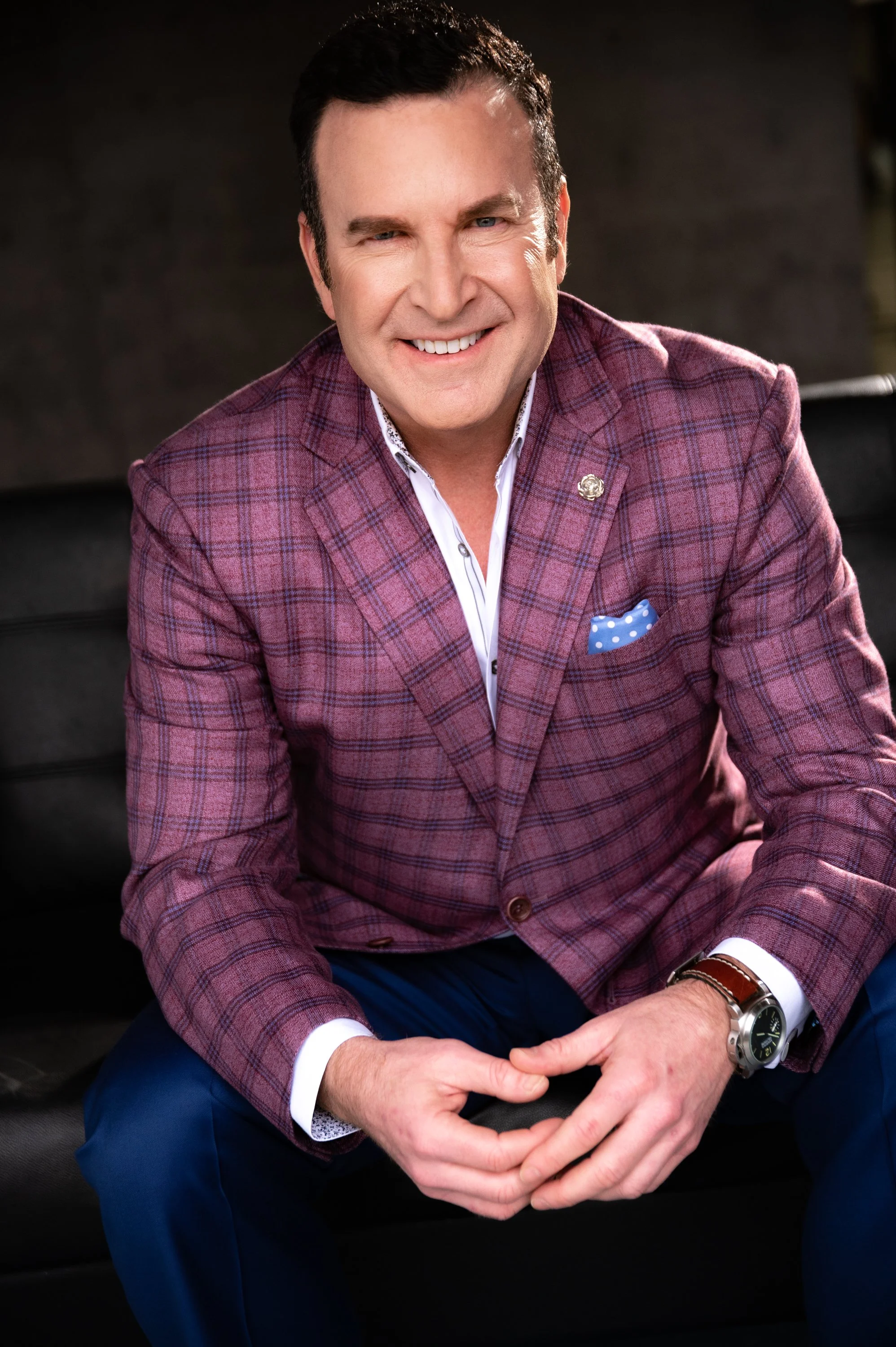
Dr. Jeff Gross
Website : https://recellebrate.com/
Instagram : @recellebrate