Glutathione 101
Guest : Dr. Nayan Patel
september 14, 2025
Steve Washuta
Welcome to Trulyfit. Welcome to the Trulyfit podcast, where we interview experts in fitness and health to expand our wisdom and wealth. I am your host. Steve Washuta, co founder of Trulyfit and author of fitness business 101 on today's episode, I interview Nayan Patel. He is a doctor of pharmacy and the author of the glutathione revolution, fight disease, slow aging and increase energy with the master antioxidant. The lion's share of our conversation today will be about glutathione, what exactly it is, how it works in conjunction with other antioxidants like vitamin C and vitamin E, why we should be concerned with the oxidative stress in our bodies, and how glutathione plays a role in that.
Steve Washuta
And Nyan was so excited to talk about health in general, I don't even think he mentioned his product, a U R O wellness.com, you can find his glutathione product. It is topical. Its uptake mechanisms are better than the other ones on the market. I believe you can do your due diligence, but I will say the Los Angeles Kings use it. Tom Brady uses it. The list goes on. Do your own due diligence, though, it was a really fun conversation. I learned a lot. I hope you will too. With no further ado, here's Nayan Patel, Dr. Nayan Patel, thank you so much for joining the truly fit podcast. Why don't you give my listeners and audience a brief bio of who you are and your credentials and what you do day to day in the medical and health industry.
Dr. Nayan Patel
Oh, thanks for having me here today, Steve, I'm a I did my doctorate in pharmacy from Southern California, and as a pharmacist, I was traditionally trained to become a pharmacist, but very quickly, when I learned that this was not the path that I want to do for the rest of my life, I literally changed my career immediately to become a company pharmacist and start working with physicians all over the country, trying to figure out customized medications and trying to provide solutions using medications.
Dr. Nayan Patel
And that has transformed into a whole new settings where I'm today, which is more into both traditional medicines, compound medications and using wellness products. So as a background, my knowledge is in pharmacy. Before the pharmacy, I was in engineering school trying to become our aerospace engineer, and that was, that's a whole different life. It's I want to do that part. But today I'm fully focused on pharmaceuticals and pharmacies and and how to use medications to better ourselves, and not just just to put a bandit over the problem.
Steve Washuta
And the lion's share of our conversation today is going to be about your book, which is the glutathione revolution, fight disease, slow aging and increase energy with the master antioxidant. But I do have to ask you, I'm not familiar with the difference between a compound pharmacist and a pharmacist. What differentiates the two?
Dr. Nayan Patel
Well, there's no textbook definition for either one of them, but I have defined myself what the differences are, because this is what I envision myself, a traditional pharmacist. Are actually the pharmacist that filling prescriptions based on doctor's prescriptions and not there's not much thinking process going on other than is there? Is there any issues, compatibility issue for the patients or not.
Dr. Nayan Patel
As a compounding pharmacist, what we are different in the sense that we are collaborating with the physicians themselves and actually making we are coming together and designing drug therapy plans that that may or may not help the patients, right? Of course, it's our goal. So May is probably going to help the patients, but sometimes it does not. But at the same time, we are both taking credit or going back to the drawing table.
Dr. Nayan Patel
If something does not work, if something does work, then we both get the credit for this. Hey, at least we chose the right medication plan. So comprehensive is actually involved in drug therapy. Designing for the patients was the traditional pharmacists are just making sure that there's nothing bad that could have happened with the medication that has been just been prescribed
Steve Washuta
for them. Can you give us a high level picture here of what exactly glutathione is, what it does in the body and how it works as an antioxidant?
Dr. Nayan Patel
Oh, absolutely. So glutathione is my passion, my project for the last 25 plus years now, and and the question is basically just on a high level, right? It's what it is in the things like that. Well, it's a three amino acid chain peptide coming together. It's known for its function, and the two functions that it does, it's an antioxidant and a conjugate master conjugator to help detoxify chemicals and heavy metals out of outside your liver.
Dr. Nayan Patel
And so it's just known for those two functions. But in reality, is what we want to I want to make sure people understand is that it's not what it does. It's more important, even though it is. It's earth shattering, and it's a really amazing to to reduce oxidative stress down and and and remove all the toxic burden from your liver. But what it does is it allows your body to basically perform better, and to and to to hyperact is regeneration, rejuvenation process and building new tissues and and peptides and proteins for your for your body.
Dr. Nayan Patel
So. That's what it allows your body to do, so by itself. It's a great product, but that it allows the body to do 10 times more than we do that can ever do by itself. And to me, that is like a deadly combination that you can have for yourself.
Steve Washuta
I'm gonna now give the other like sort of high level, I guess you would say, mechanistic function that I learned from you, that I learned from you, that I learned from your book, and you tell me what I have wrong here. Okay, so if the glutathione molecule, you label a GSh, finds a free radical, it will make sure that that free radical is then not positively charged by sending it a negative hydrogen, it then turns it essentially into water, and then that GSh binds with another GSh to form G SSH, which is sort of a dormant compound, and it waits for vitamin E and vitamin C to then help it activate when it needs to be activated again.
Dr. Nayan Patel
Well, yeah, if you put a mechanistic way, that's that's correct, except for it's called gssg molecule, because what happens is the glutathione gets oxidized by taking the free radical away, and the oxys becomes GS molecule. The two Gs molecules comes together, makes a gssg molecule. And that is an it's an inert compound that stays in your body for longer periods of time, and with the help of vitamin C, vitamin E, or even sunlight, it can become GSH.
Dr. Nayan Patel
Again, that's the recycling process of glutathione. Because it's it's hard to make glutathione, and the body has systems developed already within to recycle itself, so you don't have to keep on doing the same work over and over to produce new, new or more molecules of glutathione.
Steve Washuta
Is this agreed upon by everybody? Meaning, does? Does everybody who knows anything about glutathione say yes, vitamin C and vitamin E or would help glutathione come back, sort of to life, in existence and in the recycling process?
Dr. Nayan Patel
I mean, this is a very well known fact it's there's nothing surprising over there. The only surprising fact is that a lot of doctors still believe, or even patients, they still think, that Vitamin C is an actual antioxidant. And in reality, chemically, Vitamin C is a pro oxidant. But what it does at lower concentration, Vitamin C is actually providing an energy to the oxidized glutathione molecule, reviving it to GSh molecule, or glutathione molecule again.
Dr. Nayan Patel
And so at low concentration, it acts as an antioxidant by reviving the glutathione. But once that is finished, all the excess Vitamin C is becomes a pro oxidant. That's why they use high dose vitamin C in cancer patients all the time, or even in patients with infections, because they want to give high dose to basically increase oxygen stress to kill those infections. For you,
Steve Washuta
that's so interesting. It almost sounds like you're saying that maybe the purpose, you believe, the primary purpose of Vitamin C is just what you said. When others just think maybe that's a secondary or tertiary activity. It does. You're saying no, the primary purpose of this is to is to help glutathione, so to speak.
Dr. Nayan Patel
It is. It's absolutely is. Vitamin C is not produced by humans, because the way the body was designed, it does not the body can revive the gluta just with sunshine alone. But not there's not sunshine every part of the world. And so when vitamin C was discovered, it really helped us to to basically re to reduce the oxidative, oxidized gluta back in the reduced form, and all of a sudden we saw all the benefits of glutathione kicking it again.
Dr. Nayan Patel
And so it's an amazing discovery, but the same time, Vitamin C is not that's part of a molecule, where at a low concentration is an antioxidant, at high concentration is a prooxidant. It's just one molecule and it's throughout the season. It's the same thing.
Steve Washuta
Okay, so I want to maybe unpack if there are any differences between endogenous and exogenous glutathione. And if there are, is, is raising your endogenous more important than taking exogenous? Do they sort of work in synchronization?
Dr. Nayan Patel
So if you can raise endogenous glutathione, it's the best way. It is always the best way. In fact, there's only one drug that has been approved by FDA is to raise your endogenous glutathione, which is called anacyl cysteine. The brand name is called mucomist, and it's available in the hospitals all the time. When people come with tunnel overdose of toxicities, and they, they're using this product, mucombis, to basically revive these patients again, or if patients with the lung issues, they're doing this mucombis
Dr. Nayan Patel
To produce glutathione inside your lungs. So again, by by raising those those building blocks and increase your endogenous gluten is all. Is the best way, right? And so there, in my book, I've given all the steps you can take to increase your own digestive glutathione. That's the best way to do it. But what happens as you start aging, your production of NDIS glutathione starts dropping. Even though you have all the building blocks, something is missing, and the production gets lower and lower and lower as you age.
Dr. Nayan Patel
And so sometimes, as you start aging, exogenous glutathione, the supplementations becomes, becomes instrumental or helpful to those people, because they can go back to the youthful levels of glutathione and and re trigger the repair mechanisms for the for the human body, because as you age, you know the repair starts going down, and we have real belief structure that we are going to die and that it's okay to age, and it's okay that, hey, I'm six years of age right now, and I don't heal as fast as I was when I was 20. It is not okay. What I'm saying is I'm trying to figure out, how can we shadow the old belief structure and give the body the chance to rejuvenate or regenerate again?
Steve Washuta
Do you know if glutathione, exogenous supplements, are typically paired with vitamin C and vitamin e1? Would think that would be the case, given their synergistic effects.
Dr. Nayan Patel
That's an amazing question, but actually, there's nobody that ever asked me this question before. I've done hundreds of podcasts in the past, and nobody's asked me this question before, but let me just tell you, exogenous glutathione supplementation doesn't absorb until now. There's not a single technology part that existed until now that actually absorb into your system. And I'm talking about liposome technology products, oral capsules.
Dr. Nayan Patel
In fact, even the intravenous form of glutathione never gets absorbed into the system. And so I can unpack that for you before I answer the second question, the first picture that you asked me. So let me just tell you this part, when you, when your body takes, when you, when you inject or you take liposome products exogenously from outside sources. The body senses this as a peptide, and the body what it does with the peptide?
Dr. Nayan Patel
It just breaks it apart, breaks it down into various amino acids, because in in the body, all gluten needs to be produced endogenously, right? If that's the case, the body is not going to take outside sources of glutathione. Is going to break it up. It's going to break it apart, reabsorb the cysteine, which which is one of the three amino acids that the body needs to make your glutathione. Reabsorb the cysteine and use a cysteine to endogenously produce your own glutathione.
Dr. Nayan Patel
So by the way, if you inject IVs or if you take liposome products or take capsules of any any glutathione, they all work. They all work. But the way it works is the body breaks it down. Observe cysteine, uses cysteine to produce your own endogenous glutathione. And if that's true, no matter what you do, you're never going to reach high normal levels of glutathione if you are in the age bracket where your body cannot produce height of glutathione levels.
Dr. Nayan Patel
So for 140 years we have that we have known about this thing, there was no technology that existed to basically bypass your endogenous production, give the body what it needs, and then fill the coffer up to the high normal ranges. Until myself and my team worked on this thing years ago and discovered this new technology that we can deliver intracellular form of gluta that can be used up ready to use. Okay, so the question was, I forgot what the question was, glutane was, is, is it
Steve Washuta
paired, typically with vitamin C and vitamin E? Because that would help synergistically with the uptake Exactly.
Dr. Nayan Patel
And the answer is, it does not need to be paired, because, guess what? You're absorbing the glutathione in the first place anyways. But if you, if you, if you pair with vitamin C and vitamin E or any of those so called antioxidants, there's enough OXA is good in the body anyways, that's going to revive itself out right? So it doesn't need to be pairing, but the pairing definitely will enhance the levels of glutathione no matter what
Steve Washuta
this is an odd question. You might not know the answer to this. I guess maybe it goes with the glutathione, but other things that you might prescribe. How does transdermal medication work? Because glutathione can be rubbed on as well, right? Why does the skin let some things in and not other things?
Dr. Nayan Patel
So the skin is, is a physical barrier, and it tries not to send, not, not trying to absorb anything through, through your skin. And so all this, all the skin stuff, right? Everything is an oil, water, emulsions. That's how it works. It's an the all the active ingredients are in the oil phase. The oil gets a. Absorb into the fatty layers of your skin, the cholesterol part of your skin, and from there it's it's a slow, passive diffusion of this medication through that through the process.
Dr. Nayan Patel
And now, when you say transdermal, some of the transdermal medication that use actually liposome technology, products that they use to drive the medication through your skin layers at a very faster pace. It's not instead of passive diffusion, it's active transport, and they use the liposome technology to actually bypass some of those barriers and actually get through your system. But I'll tell you, just because you got it inside your body doesn't mean the body's gonna absorb it.
Dr. Nayan Patel
I just told you right now, if you inject it in your bloodstream, that's the best you can do as a physician, to go straight into your bloodstream, and even then the body's gonna reject it, not absorb into the blood cells, and just go dump it out and P up. Everything out, right? So getting inside your body is not the problem, right? I can inject it, I can do sub q shots. I can do whatever it takes to get inside your body.
Dr. Nayan Patel
The bigger question that, that that is, is, how can I get into the cell membrane? And so we have developed a second technology that actually goes to the cell membrane, which is, which is far more difficult task than to get through your skin, right. So transmit delivery system works right, and it gets through your skin inside your body, but does not mean it's, it's, it's going to where it's supposed to go, which is intracellular, when it comes to glutathione,
Steve Washuta
when you invent something like this, what? How do you kind of walk the line between it being a medical grade type products and a supplement does is one more beneficial to you than the other?
Dr. Nayan Patel
So that's that. That is something that we always question ourselves, right? When does it become medical person? When did it become a supplement? And knowing what I know as a pharmacist, I always want to walk that line very, very cautiously, because at the end of the day, number one rule is, we don't real. We don't do any harm to anybody, right?
Dr. Nayan Patel
Sure. And so even though this was discovered 2007 it took me 14 years of research, working with doctors all over the country, in fact, all over the world, try to gather as much information as possible before we decided to release this part to the open public, because I had to find out what dose to give, how much to give, how often to give. Can I give you indefinitely? Can I give you short time? Am I gonna get results? What results am I gonna get? Are the results indefinite?
Dr. Nayan Patel
Are you gonna get better and better, I had so many questions, and not not at zero answers, because the technology did not exist in the whole world. Nobody has ever used any product in the world before. And so I had so many questions, and you are absolutely correct when something like this is so is so good, then you want to know, is it a drug, or is this not a drug, right? And so for me is, I want to make it safer. First I want to make sure, make sure there's nothing in there.
Dr. Nayan Patel
There's no impurities inside all the chemicals that we you have a grass test by FDA, which is generally regarded as safe. So that there, we want to make sure the starting material is safe to begin with. But the safety is not because the material is safe. The safety comes from from us, is because we have 10s of a 14 years, yeah, on 1000s and 1000s of patients. In fact, for the first 14 years, we only work with doctors via prescriptions to make sure that we have a we are 10 on what's happening, right?
Dr. Nayan Patel
So we do, we did all that work. And when we do the clinical trial, when you do the human trials, it was done on only on healthy subjects, because we want to find out, for healthy subject, is it going to make a difference or not. So anyway, so that's what we have done so far. And you're right, the medical claims, if you're going to make any medical claims, it needs to be a drug, right for that, it has.
Dr. Nayan Patel
We had to go through FDA, and we had to get approval process and all those things. We are selling this as a glutathione supplementation, because all we're telling you is the glutathione is getting inside your body. And I said early on, it's not what the glutathione can do for you that's more important, but what it's allowing your body to do on its own, independently, is what's more powerful than glutathione itself.
Steve Washuta
I try to always look at books and be a contrarian somewhere. I try to pick apart little points. It was. It was difficult here, but I think my contrarian point would be very gently, is that a chicken or egg scenario with what I would call the disease states in which we find a GA such a glutathione issue.
Steve Washuta
So let me unpack that. Is it that we find a glutathione issue in all of these disease states, which you talk about thoroughly in the book, everything from, let's say, diabetes to maybe Parkinson's and the list goes on. Is it is that we find. A lack of glutathione, because the body is in overworking and oxidative stress, and we have to use that glutathione. Or is the lack of glutathione in the first place causing the issues? Does that make sense?
Dr. Nayan Patel
Yes, absolutely. And the thing is, you absolutely first. One thing we do know is that the body at every stage of your life is trying to bring back your homeostasis at all times. I don't care if you're a five year old or 50 year old, doesn't really matter, right? The body is job is to bring it back into homeostasis, right? We we throw insults in the body every single day. We put to the mouth, we squirt something. We breathe some toxic air.
Dr. Nayan Patel
We drink some some some juice, or some drink that not supposed to be the body in the first place, with some unhealthy solvents, like alcohol. So we do all these crazy things. And then we we think that know what my body is good. I will get rid of it. I can take care of myself, right? My body is good at this. He'll do all this work. But what you do not know is the body is saying that I wish you didn't do that after you I wish you did not eat that stuff or drink that stuff or expose yourself to the stuff, because now I had to work extremely hard to get it back to homeostasis.
Dr. Nayan Patel
And when you're young, it works hard, and it comes back to normal. It comes back to normal every single day because you're insulting your body every single day. But what happens is that over time, that that that line of demarcation, over the line of homeostasis, starts shifting towards, I'm coming back, but not quite there yet. It's a shifting and shifting and shifting until one day it does not come back to homeostasis. It's not enough to show up on a blood test or a saliva test or urine test or scans whatsoever, but your body says,
Dr. Nayan Patel
Hey, I can't bring you back to normal anymore, right? And then that thing starts. That's that started having increasing the oxidative oxidation, or what, because oxidative stress is the early also oxidative stress. Now, early on, some oxidative stress is not enough to cause any diseases. And then what happens over time, the stress levels doubles and doubles and doubles. And eventually the body says,
Steve Washuta
Hey, I'm out of luck, right right now is that starts
Dr. Nayan Patel
showing up with some sort of blood test or saliva test, or uterus or some scan shows up by the time it shows up in the scan. Guess what? It's 1520, years later. Yeah, later. And so when you see a disease or something like that, is it because of lack of glutathione? No, the glutathione was gone long time ago, because the body uses up all the time, right?
Dr. Nayan Patel
And the glitter's job is to reduce oxygen stress down, and he already, oxidative stress state to begin with, and for years, if not decades, before you got a disease. So to me is, is gluten an answer for these diseases? No, it's not the answer for these diseases. But glutane will actually help reduce oxygen stress down and then allowing your body to start fixing what's broken. Can it fix back to normal? No, it is not going to fix back to normal.
Dr. Nayan Patel
But if you have no diseases at this point, there's a there's a higher probability they I can come back to homeostasis at a lower age, like like when you're 25 or 30 years of age. But if you have a disease, if you have diabetes or hypertensions or or cancers or any autoimmune conditions, I cannot go back to have no disease again. I can go back to normal so you don't have the symptoms of this disease, sure, but I cannot go back to zero anymore. Yeah, it's tough. It's too far gone, yeah.
Steve Washuta
And, you know, even investigating that doesn't seem worthwhile because, and I'll sort of unpack what I think about that the chicken or the egg, whether it's low glutathione that causes an issue which we don't necessarily think or whether you now have low glutathione because your body was an oxidative stress because of all the issues you caused it. If the answer is the same, which means, do everything you can early on in life to make sure endogenously, your body is producing the most glutathione, then that's the answer anyway.
Steve Washuta
So who cares? It's the same thing like, well, to put it in pharmacy terms, right? When, for whatever reason, it must be my skin, but I get a staph infection once a year, and whether that staph infection is caused between a spider bite or, you know, just an ingrown hair, I'm still giving Bactrim. Regardless. They don't care which one it is, right? They're not going to investigate it. Take the Bactrim. This is the solution. So, so maybe it just doesn't matter.
Dr. Nayan Patel
It does not matter. But the same time it does matter, because we have been trained is to we are a disease state model where we only prescribe or we treat people. If there's something wrong with you, we don't get paid if by helping you stay healthy, we don't. Nobody gets paid for keeping you healthy, right? It's podcast like you that basically brings to the highlight of the people I said, Hey, there's a better model out there than treat sick people. How can we help you today so you never get sick in the first.
Dr. Nayan Patel
Place, right? And I'm 54 years of age right now. I'm in the best shape of my life. At 40, I was saying 30 vitamins per day, and I was not feeling great. At 55 down to one vitamin per day, and I feel like a million bucks right now, right? And the whole transformation happened. And it's not just the pills, right? It's my diet, it's my exercise.
Dr. Nayan Patel
Routine. Is the what I drink, what I eat, what I choose to do, what I choose to put my mind, right? And all those things have transformed me to who I'm today, right? And I and what I'm what I'm saying is that if you're disease free, and if you want to stay disease free, do whatever it takes to reduce oxygen stress down, right? Yeah. And if we can do that part, there's, there's a hope that we, we're going to see to 120
Steve Washuta
Well, let's hope so. You, you had a a study in there. I think it was a 2012 study with the mythical Bellman that referred to autism, and I guess the children, the autistic children, were 20 to 40% lower glutathione levels. Is that correct?
Dr. Nayan Patel
Yes. Again, this was, these are some of the studies that we've done in the past. Again, what you what you just said earlier, I was just recently at a conference at a pediatric conference talking about glutathione on autistic kids and spectrum disorder patients.
Dr. Nayan Patel
And same thing came over, over and over again. I said, this patient's lack of glutathione, or is it they have a defect where they cannot produce enough glutathione, or is that that they have a defect of detoxification where the need of gluten is very high either way, like, for example, if you have a job and it makes a certain amount of money, but your needs are double the amount of money you can you can make because you have you have a condition, right? In that case, if you're completely healthy, and only thing you need is to feed yourself and have a roof over your over your head, your needs are very small. But what if you you are not healthy, you have a disease.
Dr. Nayan Patel
So there's an expense for that. You see a shelter, you have a special diet because of the disease you have, and now all of a sudden, your needs are very, very high, but you can only make the same amount of money. Yeah, right. So needs are very high. So the autistic kids, we don't know which one is what. So again, so the study was done that, yeah, these autistic kids have low glutathiones. It's not because they don't produce enough glutathione. They're already producing some. Is the needs are very high, sure.
Steve Washuta
Yeah, that's a hard thing to study, too, because, you know, we're not going to get into this now, but my wife's a pediatrician, and it's such an umbrella term, obviously, right? My wife has had patients with chromosomal deletions or fetal alcohol syndrome. So we know that, but, but they're also on the autism spectrum, but the etiology behind their issues is the chromosomal deletion or the fetal alcohol syndrome.
Steve Washuta
But they're grouped in to the autism spectrum because, well, sometimes there's health benefits for that, like, as far as the parents, right, they can bring to certain schools, or there's, there's medical benefits. So it's really hard with the umbrella being so big, if you have three or four, you know, issues going on, how do we put you in a study and know which, which one is causing, which it's probably, you know, another story for another day, but that that does make it hard when we do these studies,
Dr. Nayan Patel
it is hard because one of the doctors has worked telling me that there's not a single study that actually that actually rip it apart, right? Because the thing is, human body so complex, so complex. We've been doing medicine for 1000s of years, and guess what? We still nowhere close to finding out everything about the human body. Nowhere close, right? If you have done gene mapping, we're done down to the earth like middle center of the of the universe.
Dr. Nayan Patel
But yet, we do not know how the whole body works, and the number of medicines we have in the world is tiny, tiny portion of what a whole body needs to survive. And we assuming that the drugs are going to be solving, solving mankind issues. No, I'm telling you as a pharmacist, no drugs are ever doesn't exist, or they're never going to exist to save you from dying, right? So we kind of look someplace else. We can't look someplace else. Look at your diet, look at your other things that we are doing that can, that can help us live a better, longer life, right? Drugs are not the answer, and this is coming from a pharmacist who makes money selling drugs.
Steve Washuta
Well, I couldn't agree more, as a personal trainer, you know, one of the first things we do is we have an intake form called the health history form, no different than you do at a doctor's office, right? So I have, you know, previous injuries, age, medications, things of that nature. And what I've noticed over the years I have 30,000 hours experience in this industry, is every time I get a health history form, there's nobody, nobody.
Steve Washuta
I've never had anybody on one medication. I've had a lot of people on zero, but I've had a lot of people on multiple, meaning you're never just on one, because once you've accepted one, then then you think that's the solution. So now you're on two, now you're on three, now you're on four, now you're on seven, right? So you have a lot of. People on zero, and you have a lot of people on 4567, but nobody's just on one. And I think that's a it's a mentality aspect.
Steve Washuta
I think it's, it's what you just said is absolutely correct. You accepted the fact that I'm occupying a pharmaceutical drug every single day. There's nothing wrong with it if you have a disease, that that was a fear, if you're if you have a thyroid condition, and there's no way you can survive without thyroid, you take thyroid medication that, yes, new thyroid medication.
Steve Washuta
But with that comes also whole bunch of other diseases where it's fixable if you fix your thyroid, and then to go back to nutrition, because what you did is correct. If you accept one drug, you can accept all the other drugs that comes along with it, and that's that's a dangerous path to go at
Steve Washuta
some point in the book. And I don't know exactly where this comes into play, so you can remind me you mentioned the MTF, HR gene, which is big now in the media. Because of what I just mentioned, the methylcobalamin, we found out that if you have an issue with that gene and you're taking that rather than what you're taking cynical Bowman, right? The synthetic version that your body might not, might not synthesize that the right way, is that correct? Have you? Have you, have you read into that? If the thing is,
Dr. Nayan Patel
it will synthesize it correctly. But what it needs, what it does not do, is that it does not provide the methyl group that your body needs to detoxify yourself. So here's the thing, right? When you, when you have MTF, IG mutation, you may be expressing, you may not be expressing, we don't know that part yet, but at the same time, let's see if you take any kind of methyl donors. Methylcobalamin is one of them. You eat cruciferous vegetables and things like that, to give methyl groups, what it does, it helps conjugates and detoxify your body better.
Dr. Nayan Patel
Now, if you do not do that part, the work still needs to get done, right? You still have the body to clean up the body from inside your liver. You still do it. So it's not a glutathione job to do that work for you. But can the glutathione conjugate and get rid of the products for alpha system. Yes, it can, but not if the methylcobalamin or methyl groups are given to you enough they say, Hey, my jobs. I don't do that work because there's better product that can do that job. But if you do not do that part, glutan gets used up a lot more for something that you can do with with with some other products, right?
Dr. Nayan Patel
So, yes, glutathione can do that work, and even though it's not his job, he can do that work. But keep in mind now your need for gluten just actually increase way higher, because that is doing two people's job. It's like year one job. Yes, you can still clean the garage and and do the plumbing at your house and do the electrical work at your house, but that's not your job. That's somebody else's job that should be taking care of it.
Dr. Nayan Patel
But you come and say, Hey, honey, I want you to do do all this work today as well. So oh my god, I just keep on my eight hours of job. I can do that part, but that's not my job. But guess what? You end up doing that work anyways, because that these attention right? And so what I'm saying is that if your body needs attention for something that's not a glutathione job, then please do that as well, right? Because glitter can do that work for you, but that's not its job.
Steve Washuta
Yeah, that makes sense. You know, as I was reading through this book, as you were just saying this now, for whatever reason, in my mind, a lot of my analogies go to sort of military planes, you know, if glutathione is like the Big B 12 bomber, right, that can wipe out huge cities with nukes or something, you don't necessarily want that to be doing small missions, a mission that an F 16 would do, right, because it has its job. And then at the same time those smaller ones, right? If you consider vitamin C and vitamin E, the small f 16, they will then refuel the B 12 bomber when it needs to be refueled to do the big work. So I see a lot of like the military plane analogies,
Dr. Nayan Patel
absolutely, that's an amazing way of putting it down. Because even the b2 bombers, when it goes out there, it needs to refuel all the time in the mid air, right? And you need the vitamin C coming to rescue all the oxides glutathion to keep on revive is to keep on doing its work. But the same time, I want to make sure people understand that, hey, glutathione, even though it's the big behemoth and it's an amazing product, but the real work, the real work is done by human body. Keep in mind the glutathione is the number one molecule producing human body is a lot of function.
Dr. Nayan Patel
And if the number one job that your body has to do every single day is taking care of it, the body has plenty of time and resources now to do the rest of the job. And I can tell you that if you're 80 years old, 90 years old, and you have limited resources, and you give the body abundance of blue with iron, and tell the body said, Hey, you go do the rest. Oh, my God, the body starts healing, reprocessing, rejuvenate, regenerating.
Dr. Nayan Patel
And I've seen it with my own eyes, with my own father at the age of 80, when he was struggling, right? And for the last. Last nine or 10 years until he passed away. He had the best life that he could ever imagine for for 90 year old person, right? And so, so what I'm saying is that, as well as good that is good for you, it's what's allowing your body to do the actual work is more profound than the good that itself. If I'm
Steve Washuta
general population, and I've just listened to this whole thing. I think the next question that I would have, because I like to put my mind in the the average person's brain, is, how do I know if I have enough glutathione, what is the test I have to do? How expensive is it? Is it a simple blood test? Can I ask my doctor about it? What are the steps for me to get tested?
Dr. Nayan Patel
So there is a blood test and what there's a blood test. You can do that part. But keep in mind, the doctor needs to spin the blood, remove the plasma out of there, and just test the red blood cells. Because the red blood cells is where the gluten needs to be. The plasma. Half Life of glutathione is very, very low. And so sometimes, if it's zero, you don't think it's you have no glutathione. Sometimes it's very heavy, because you just, probably just probably just produce some. You don't feel like, Oh, I got plenty.
Dr. Nayan Patel
I don't worry about it. So I would not measure the plasma. I'll measure the RBC level because it's a little bit more stable enough. But keep in mind, if you're over the age of 40, there is no chance that your gluten levels are normal. They're always suboptimal, because the best thing to do is to measure oxidative stress. If you can measure oxidative stress markers in your body, that which is MDA, which is metaldehyde levels, or oxidized cholesterol levels, or APO B levels and things like that, you know there's oxidation happening already to the point that you're getting oxidized.
Dr. Nayan Patel
Seems like getting oxidized inside your body, right? If that's already happening, I don't care if the gluten levels are normal at this particular point, what I'm seeing is that overall, you have all the stress markers are already there inside your body that needs to be addressed now, regardless, and there's three things you have to do. Supplementation is the last thing, there's two other things you do before supplementation to make sure that you have the final chance, so that you don't get oxidized from inside out.
Dr. Nayan Patel
Yeah, I love how you said that, too, because ultimately, lab work is really just a snapshot in time, and the fact that, like you said, even if things look good, then the whole purpose is to make sure that we're doing the right things, that they continue to look good. And coming down the road, if those oxidative stress markers are high, even if your glutathione isn't, it's going to be at some point, or glutathione low, it's going to be at some point. So get ahead of it and do the right things. And the thing
Dr. Nayan Patel
is, the range is so big, it's like a fiber to 1000 micro moles per liter. I see it's huge if, if I know that the root cause of all diseases is oxidative stress, I'm not okay with 500 I'm not hungry. I want 950, or 1000, if possible, if I go too much is not good either. Because you don't want zero oxygen stress. You want some oxygen stress, because our body survives on stress. There's no stress, guess what? We become flimsy, completely dead, right? And so we need the stress, right? If you exercise, you will know that part. You don't, you don't build your body under zero stress. Your body, you build body in stress only, right?
Dr. Nayan Patel
And so you need, you need the stress amount, but not to a point where it's damaging your body, right? Permanently. And so if I was, if it's me and my body, I want my also stress to be bare minimum, that that generates a response to rebuild your body and not become lazy and complacent, but not to a point where it's, it's, it's beyond a bodies can function and repair and is not causing end stage diseases. And so I need to my levels to be high normal.
Dr. Nayan Patel
So the range is so big that I don't want to give false hope to people that, oh, I'm on the lower part, which is still normal. It's okay. It's like, How much money do you, I mean, live in California. So if we say, ask anybody, any Californian, how much money do you need to survive in California? But the polyline is 50, is 45,000 bucks. And for 40,000 bucks you can even, you can even afford a car in California. Forget a house, right?
Dr. Nayan Patel
And if you're making $250,000 Yeah, you can afford a house, but it's a little shack, a tiny shack into things well, so it's like, how much, how much do you need to survive on? It's it's the more is better kind of analogy for the money part. But when it comes to glue, that the right about is very critical, low is not going to be an answer for us.
Steve Washuta
You have a chapter that talks about eight toxins to watch out for. Can you tell us a little bit about those? You don't have to go through them all individually. You can go through the ones that maybe the general population should be most aware of why they're not banned and how to avoid them.
Dr. Nayan Patel
So the law of toxins in the agriculture industries that protects the crops and those are never going to go away. There are some there to protect our water systems. Those are not going to go away, but there's one. Toxin that you, that you consume knowingly, which I want to watch out to bring awareness to you, is alcohol. Alcohol is a known solvent that a single drink of alcohol can wipe off your gluten oils for the next four hours. If that's not compelling enough for you to stop drinking, I'm not sure what else is going to be helping you, right?
Dr. Nayan Patel
But it's, it's easier said than done, because alcohol has has a very sticky situation where the whole our human connection is built on a relationship is built around alcohol, right? Let's have a get together party. Let's have a meet up party. And as a human being, we are social. We are socially connected to each other. If you live in isolation, we're going to die anyways, right? In isolation, people drink more, but in reality, people are drinking more in human connections than in isolation.
Dr. Nayan Patel
The key is, how can you connect with human without consuming alcohol? It's the most difficult thing to ever do, right? So I can talk about all the toxic chemicals that are out in the world, but until you can conquer this one thing, which is doing more damage than any other chemical that's out there, let's work on that one first, right?
Dr. Nayan Patel
And I did the pledge myself. I started doing alcohol a couple of years ago, and I'm going to go without that for as long as I can, right, or as long as I live, hopefully. But we want more people like me to can take the same pledge. So chemicals, some are avoidable and some are not avoidable, right? You cannot avoid some of the chemicals that comes out of the soils, because they've already been sprayed on for for years ago, right?
Dr. Nayan Patel
But what you can do is, in those cases, is to understand that there are that your needs for growth is going to be higher anyways, and so you make sure you you do whatever it takes to eat the the those amino acids in your diet, to increase your gluta levels, to reduce your exposure to any chemicals that you can, some some things you cannot, but whatever you can, reduce your exposure down to as much as possible, right? If you want to drink water, make sure you drink purified water.
Dr. Nayan Patel
That means it removes all the chemicals out of there and you just drink purified water and things like that. So what you want to do is do those kinds of things. I don't mention the all eight because I don't like to to for people to jump on fear. I want to people give, give them the hope that that if you do the few things that are you gonna avoid 100% of all chemicals? No, you're not gonna avoid that person, but if you can avoid one chemical that is the biggest disruptor. Hey, you You are so you're going someplace further than most of the people that's out there.
Steve Washuta
You have a chapter called 14 days to kick your buttify on making machinery into gear. And the reason I like this is because you're not not a lot of books will do this. And I do like when books do this, where you actually have what I would call, like, a practical, tangible utility to give to people. So we have been talking about the science, because that's what I'm interested in. I know food, right? I know exercise, I know this stuff. What I don't know is the mechanistic stuff. So that's what I'm more inquisitive about.
Steve Washuta
So that's what I want to talk to you about. But for the general population, why you get this book? Well, reason, right? Maybe it may be the the main reason is because there's a, there's a there's a practical guide in here, right, a plan that shows you what you can do that you can laid out. How much time did it take you to put that, that guide together? Did you follow that guide yourself? Did you confer with others when making that guy, just give me the 411, on that. So let me
Dr. Nayan Patel
sort of Steve this. This is it's a marketing plot. It's not a 14 day plan. It's a lifelong plan. It's not a 14 year plan. So if you, if you believe that that I've been marketing to you, you better believe the answer is, yes, I am marketing to you because people want to. People to say, oh, it's only 14 days. I can do that part. But what's in that book is my diet every single day for the last 27 plus years, right? And, yes, I didn't have to consult my wife for some of the recipes, because I don't cook all the time. Well, I don't cook ever, right?
Dr. Nayan Patel
So I had to tell my wife. I said, Hey wife, how do you put all those things together? So she helped me put the recipes together that I eat every single day. But yeah, if you believe that the 14 is all you need to boost your gluten level, you're kidding yourself. This is my lifelong plan, and whatever, whatever the diet that I'm recommending is my lifelong diet plan, right? So I do breathe and live every single day. I'm a vegetarian most of most of my life, right? I had chicken when I was once in a while. I had some fish once in a while. And today, I'm giving up every single thing just put a vegetarian diet.
Dr. Nayan Patel
I do take my amino acids to get my proteins and things like that, so I feel, I feel better about those kinds of things. But all. Overall, the diet plan was to do two things, reduce my exposure to chemicals and pesticides and fertilizers that I have to consume, and hopefully give a chance and buy to get your basic building blocks to rebuild your body. Glitter is just one of them. There's so many things we need on a daily basis. So I like to keep my diet very simple. And the diet is pretty much, it's an anti inflammatory diet, so to speak. But if you fell for the marketing plot, you're not the only one. I'm sorry.
Steve Washuta
Well, it's not just, you know, the marketing of course, people are going to fall for that, but the fact that there's, it's not just science, right? You're not reading a book about how glutathione works in your body. Specifically, you're also getting real, tangible advice. How do I implement this into my life so that I can be a healthier person? We're right. I like the science part, but the implementation, right? Those those keys, I think, is really important. And not everybody does that when they write books.
Dr. Nayan Patel
So Steven, let me, let me tell you, why would this book out? First of all is that when I was doing my research on glutath, I'm going to first discover this molecule how to get inside your body. Oh my God. Every single day, I was getting patients calling me from all over the country said, Oh my God, this has changed my lives, right? It has changed my daughter's life. Has changed my father's life and things like that. So when I start getting the stories, I said, Okay, this feels good. You know, I don't get, as a pharmacist, you don't get to hear the stories, because drugs doesn't do this, this profound impact in people's life.
Dr. Nayan Patel
They don't. So when you hear the story, initially, it's okay, whatever, right? You poop with idea, but the story starts keep on coming over and over and over again. I said, Okay, you know, wait a second. Three years have gone by and I have no data. So I started collecting the data. You know, as much as I remember the people, I said, calling them. Said, Hey, can you tell me your story again, one more time? How did it work for you and things like that. So the so the book is all about the stories, about how people transform their own lives, right? And when that happened, it's more about people only change if they see somebody else have changed.
Dr. Nayan Patel
Hey, that's good. You go first, right? That's what I tell you. Hey, that's a good idea. Why don't you go first and tell me how it goes, and then I'll do it myself. And so I want people to to to help themselves, but they can only help themselves if they see a change in somebody else first. And so I want to empower people to make a change, because it has already helped a lot of lives, and not just humans, even animals. I had a story about the horse right in there, the horse guys, I mean, the horse was, was a deadbeat.
Dr. Nayan Patel
Horse was not supposed to race, and it was, is on his way out, and all of a sudden, use the horse are using Gooda just to protect the horses and die on the racetrack. And the horse won the race, I said, Oh, my God, I can't even believe it, right? And so that's a very profound story, because it's, it's not just human beings, it's every animal on this planet needs some help someplace, right?
Dr. Nayan Patel
And so my job with this book is to just empower people that, hey, you're not the first one, but somebody has already done it. If this thing resonates with you, you got to give it a shot. Do the diet plan reduce toxicity loads? And if all and if you've done every single thing, and if you're about the age of 40 or 35 in some cases, use a way to supplement yourself so you can stay at par at all times.
Steve Washuta
And I would say that the glutathione, and you can correct me if I'm wrong, should be looked at as the raising of the glutathione as the end result of good decision making. Meaning, we're not purposely trying to raise our glutathione for its own sake. We are making healthy decisions, like eating the things you talk about, like avoiding the toxins you talk about, like exercising, so that in turn, we become healthier, have less less oxidative stress, and have higher glutafile. That is the end result of this.
Dr. Nayan Patel
It's the way of life. The end result is, is the life you choose for yourself, right? By the way, the human body was not designed to have cheat days. You cannot have, oh, I've been healthy for the last one week. So today's Friday night. It's a girls night out. I'm gonna have fun. No, the body was not, not designed to have cheat days. Who created cheat days?
Dr. Nayan Patel
I do not know who created cheat days, right? So if you believe that, then you can still have fun. You can still have fun with your girlfriends and boyfriends and everybody else, right? Go have fun, but do not destroy your body in the process. Figure out healthy choices, and if you can do that part, you can have fun for rest of your life, and not for short amount of time.
Steve Washuta
I actually know who created toothpaste, by the way, and that was so it's a it's a bodybuilding thing, because in the. Bodybuilding world is a lot different, right? So if you're on 600 milligrams of testosterone and a bunch of other things, right, you're obviously going to be able to retain muscle more. In order to retain muscle, though, you need to be in a caloric surplus.
Steve Washuta
So a lot of these bodybuilders would eat pretty clean during the week, but then on a Saturday or Sunday, they want to go into an extreme caloric surplus to help them maintain a high muscle mass, they're not healthy. Most of these bodybuilders are dying at 40 and 50 years old. They have heart issues, but that was their plan. They looked good, right? People used to look at Arnold Schwarzenegger and say, I want to be healthy like him. He wasn't healthy. He just it
Dr. Nayan Patel
was a vanity, that's right, it is. It is mostly vanity. As a compli pharmacist, you better believe I've my share of fair patients that have been come to my pharmacy for for enhancements, performance enhancements, and that's it. That's not what I do. I can, I can help you become a healthy human being. But if you're going to destroy your body in in the vanity, that's not the pharmacy I'm going to be at. Right? So yes, what you're saying is, I've dealt with all kinds of people like that in my previous life,
Steve Washuta
there's a fantastic book. I'm going to hold it up to the screen here. Oh, thank you. My own revolution, why don't you let listeners know where they can find the book and more about you.
Dr. Nayan Patel
So the book is everywhere, right? You can find out your favorites online retailers. It's also on the digital copy, there's audible copies too. So if you have, I don't know, any premium subscription to to audiobooks, you can get those over there as well. The book was released before I had the product ready to be public, so there's no mention about any products inside the book.
Dr. Nayan Patel
So take this information as as as something that can hopefully excite you to become better version of yourself. That's what that's what the book is for, is to just to help you to bigger, better version of yourself. Because you're not competing with me or you or anybody else. You're competing with yourself, and you can become a better version for yourself. If you have any questions, reach out to me.
Dr. Nayan Patel
Come to my website. Is oral wellness.com a, u, r, O, wellness.com please feel free to read my blog articles. I do spend time and energy to write different types of blog articles. How do that is helping with athletes, and how does it help with with disease managements and things like that? So I I do take time and energy to write blogs every week, if possible. Sometimes I'm busy and it goes every two weeks, but regardless, my job is to educate and we shed light to everybody about this. For this mass energy
Steve Washuta
officer, I will put the links to the blog and the book in the description below. My guest today has been Nayan Patel, author of the good fire and revolution. Thank you for joining the Trulyfit podcast. Thank you so much. Thanks for joining us on The truly fit podcast. Please subscribe, rate and review on your listening platform, and feel free to email us. We'd love to hear from you social@trulyfit.app. Thanks again.
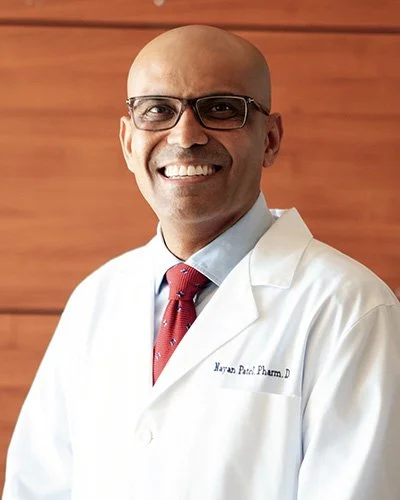
Dr. Nayan Patel
Website : https://aurowellness.com/
Instagram : @aurowellness