Dr. Bill Andrews: Anti-Aging & Telomeres
Guest : Dr. Bill Andrews
november 1, 2025
Steve Washuta
Welcome to the Trulyfit podcast, where we interview experts in fitness and health to expand our wisdom and wealth. I'm your host. Steve Washuta, co founder of truly fit and author of fitness business one on one on today's episode, I have on Dr Bill Andrews, he has been featured in Popular Science, the Today Show and numerous documentaries on the topic of life extension, also known as anti aging, including most recently, the movie The immortalist, which also his costar was Dr Aubrey de Gray.
Steve Washuta
Bill has been a medical researcher in biotech since the 80s. He has focused on things like cancer and heart disease and inflammation research, but his passion, as you will hear in this podcast, is really for anti aging. In the early 90s, Bill led the research to discover both the RNA and protein components of the human enzyme called telomerase. If you're not familiar with that, it's the enzyme that's responsible for preventing telomeres from shortening and human reproductive cells, and that's what people believe causes are aging.
Steve Washuta
Bill's a scientist. He is not a marketer, and you will hear that he does not speak like a marketer. I appreciate Bill's work in this area, and I will list his direct email address if you have any questions. As far as aging is concerned in the description for the podcast, I will also refer you to the good inside.com that is who sells televital, which is the supplement that Bill has helped create with all of his years of researching and anti aging with no further ado. Here is Dr Bill Andrews and myself. Dr Andrews, thank you very much for joining the truly fit podcast. Why don't you give my listeners and audience a brief background of your credentials, your bona fide a so to speak, and what you do day to day in the health industry?
Dr. Bill Andrews
Yeah, let's say that my I'm obsessed with curing the aging process, and when I say curing aging, I mean extending our lifespan and health span a lot longer than it is right now and indefinitely. So I've been interested in this subject since I was 10 years old, when my father put the seed in my head, because he was really interested in it. When he learned I was interested in science and medicine, he came to me one day and said, Bill, when you grow up, you should become a doctor and find a cure for aging. I don't know why nobody's done that yet.
Dr. Bill Andrews
And I mean, it's it's stuck with me. In fact, there's a documentary called The immortalists, which I'm the star of, that was made about 10 years ago, and my father was included in it because of his his involvement in getting me started, plus he and I would go to anti aging conferences together afterwards, because of his interest. Even though he wasn't a scientist, but he was a television producer.
Dr. Bill Andrews
He passed away in 2015 from Alzheimer's, but he was up until then, like my partner in everything I was doing, but I just started right afterwards, even in high school and college and stuff like that, trying to best way to describe is like a scavenger hunt trying to figure out all the things I need for my arsenal of tools that I need to really understand aging. Okay, you know, I knew all the theories, and none of them made sense to me.
Dr. Bill Andrews
They all had the twos and twos had to add up, so I embarked on my own mission to really understand what aging is, and kind of found myself pretty much ignoring everybody else's theories, because simple things like the theories didn't explain why dogs and cats age differently than humans. You know, like they they don't just age differently than humans. All the diseases and stuff like that have happened in humans happen at the same percentage of time, not the same time.
Dr. Bill Andrews
So it's like the cancer, brain damage, all this kind of stuff occurs in a similar rate relative to their maximum lifespan as humans, and so the theories that existed didn't explain it. Most of them were like environmental like you age because of damage from the environment and things like that, but it just didn't explain the differences, and it didn't explain why people on the North Pole and South Pole age at the same rates of people live elsewhere when the environments are very different.
Dr. Bill Andrews
And so I don't know, like in especially in college, the anti aging clubs that I organized had some future Nobel Prize winners in there. And so we ended up having some decent studies. In fact, one of them Bruce Beutler, who got the Nobel Prize in Medicine in 2010 he and I actually started doing work in a fruit fly lab at UC San Diego, trying to understand aging, trying to study aging. I've since realized that aging and fruit flies have nothing to do with humans and but that was part of how I learned. I was doing that, but I built this arsenal, you know, everything it's like in college, I was a biology major, but I was really disappointed that there was no, like, no courses in how to teach you, how to be a scientist, how to do an experiment, things like that.
Dr. Bill Andrews
So, but there was no part of the teacher. So I went to counselors, and they said, Well, you know, go into the experimental psychology department and start taking some classes. And so that's what I did. I started Experimental Psychology learn scientific method. Believe it or not, they don't teach that in biology's biology courses, but I I learned a lot about I made a special emphasis to take the classes that I thought I would need to do study aging.
Dr. Bill Andrews
And for instance, like when you look at a curve, a graph of the age that people die at, okay, it's a linear thing. Then there's a peak, and then it goes up and down. It's it's not a normal distribution, it's, it's not even a Poisson distribution, it's, it's, but it the shape of that curve would tell us something about what's going on with aging and so learning mathematical modeling, which I learned in psychology and statistical theory and things like that help me understand what is that graph telling me about how we age? And what it came down to is that there's actually some type of clock.
Dr. Bill Andrews
There is a clock. There is a clock that's dictating how old we how long we live. The clock same for everybody, and mostly everybody, but there's this hard cut off something is actually providing a limit to our lifespan that is actually pretty consistent with everybody. Because if it was like a normal distribution, we'd expect some people to live to be 1000 years. Some people live to be five years, you know, and then have an average but it's not like that at all. So we also, when I was in college, learned about something called the Hayflick limit, which was Leonard Hayflick had published that human cells can only divide a limited number of times.
Dr. Bill Andrews
And with all the theories going around me and the group that I used to hang out with, we concluded, okay, this is actually making sense. This would explain all the twos and twos that, you know, explain all the data about animals and humans and living elsewhere and stuff like that, about aging. And so we decided, if a human cell can only divide a limited number of times, there must be some way for a human cell to count, okay?
Dr. Bill Andrews
And human cells don't have brains, and so even in a petri dish, you you can take human cells and you know exactly how many times they can divide before they stop, okay, not true in mouse cells or rodent cells, but it's true in human cells. And so we decided the only mechanism that you could that could exist was something there had to be, something like ride tickets and an amusement park inside of ourselves.
Dr. Bill Andrews
As I said, cells don't have brains, so when a cell divides, it loses a ticket. Cell, it divides again. It loses another ticket. When it loses all its tickets, it can't divide anymore. So what were those tickets? Okay, so in graduate school, I tried to figure out what those tickets could possibly be, after I got my PhD in Molecular and population genetics.
Dr. Bill Andrews
Okay, so let me say population genetics is the study of the why and how of evolution, not the what and when, what you usually hear. Okay, why did we evolve this? Or how did we evolve this? And the big question I always want to answer is, why did we never evolve a way not to age, if aging is so bad for us. So I learned a lot about that. It helped a lot with my trying to put all the pieces of the puzzle together.
Dr. Bill Andrews
But I when I got my PhD, I had applied for postdoc positions in labs all over the world to study aging, and I got accepted everywhere I applied. And so I went and interviewed them, and then decided all of them were wrong, as they were all they wouldn't accept the Hayflick limit. They thought that Leonard Hayflick was crazy, you know, I thought he was right, but I they had these ideas that just made no sense, because they couldn't explain everything. So I totally gave up on the idea of finding a lab to work on under somebody else's direction in aging, and I went into biotech and did cancer research, Heart Disease Research, inflammation research and stuff.
Dr. Bill Andrews
And I had a really successful career. I played a major role in a lot of the big. Blockbusters in biotech that occurred, and so I became quite well known, but, and that was important to say, because then one day, my father and I went to an anti aging conference in Lake Tahoe, and we heard Dr Calvin Harley talk about the fact that telomeres the very tips of your chromosomes shorten every time a cell divides. Okay, so let me go.
Dr. Bill Andrews
So telomeres are the very tips of our chromosomes. If you think of your chromosome, which is a long string of string of beads, the sequence of the beads tell you what hair color and eye color you have at the very ends are these telomeres. They're like the caps on your shoelaces. Okay, so think of a DNA molecule or a chromosome as a shoelace, and the caps on the tips of your chromosomes are sent to the aglets, same as you find on your shoelaces. So he said that he they shorten every time a cell divides, and he could, he could take blood from anybody. Could measure the length that are tumors and tell them how long they'll live and how old they are.
Dr. Bill Andrews
So, um, so I thought, here's the ride tickets. Okay, this is it. So before he could even get off the podium, I went up to him, and I said, has anybody figured out how to re lengthen telomeres or how to add ride tickets back? Because the way to show that that has anything to do with aging is if, if you made the telomeres longer, you should see reversal of aging. Okay? And that's from a scientific method of point of view, that's what you got to do. You can't, you can't. Otherwise, it's just correlation. Okay, you have to show that it's it's cause, it's also causation. But he said that they had been working on it for years with zero success.
Dr. Bill Andrews
They've been collaborating with labs all over the world, and had never figured out what's causing it, and this is why I was telling you about my other background. I I just said to him, boldly, let me come and work with you, and I'll have it figured out in three months. And which kind of was something you wouldn't say after hearing that everybody else has been trying to do this for years and years with no success, but he, he offered me the job on the spot because he knew my background.
Dr. Bill Andrews
He knew, you know, I'm one of the discoverers of human growth hormone, tissue plasminogen activator, Erythropoietin, beta siron, osteoinductive factor, several cancer drugs including ritello, R, Y, T, E, L O, that just got approved by the FDA, and I I've been so I've had a successful career in biotech of making things happen. So he offered me the job on the spot, and I left my company that I was a lifer at. I thought I'd never leave this other company I was at, but I went, and three months later, he put, he first, you put three quarters of the company reporting to me, and then three months later, we discovered an enzyme called telomerase, human telomerase.
Steve Washuta
And when you tell me what year that was, because I feel like I've learned about that in in high school,
Dr. Bill Andrews
yeah, when that was long time ago. It was the mid 1990s early to midnight, I started. I started there at Geron in 1993 and so in December of 1993 and early 1994 I was presenting data showing we had discovered this enzyme telomerase, and the way we discovered it was I started saying to myself, if every time a human cell divides, the telomeres get a little shorter, then our children should be born with shorter telomeres than we have, because it takes cell division to produce the sperm and the eggs.
Dr. Bill Andrews
So I decided there's something going on in our reproductive cells, or primordial germ cells, there's something going on in those cells that is preventing the telomere shortening. So we just started looking to see what's the difference between reproductive cells and normal cells, and we discovered this enzyme telomerase. And first thing we did was we put it into normal skin cells grown in a petri dish, and we showed that it completely stopped the aging process, and to our surprise, reversed everything.
Dr. Bill Andrews
Reversed aging by every biomarker we had now, growing cells in a petri dish isn't so exciting demonstrating that next thing we did is we grew human skin on the back of a mouse and treated that human skin, and we saw that that aging got reversed in every. Way imaginable. And so the next step was to start treating animals. And so well we first, we first realized, did some studies, and we found that the mice don't age by telomere shortening. Mice. The aging process in mice is totally different from humans.
Dr. Bill Andrews
That's why I think studying aging in mice is completely waste of time, as well as as as was also fruit flies and round worms and other other animals that people study aging in humans are very different. In fact, let me just say on the side right now, the only animals that we've ever discovered on the planet that have the same aging process that humans do are humans, other non human primates, dogs, cats, horses, sheep, pig and deer. Everything else ages by some other mechanism or it has no detectable aging.
Dr. Bill Andrews
But so we sent this so dr Rhonda pennel At Harvard, he had engineered, constructed a new mouse strain that did age like humans. So we sent our technology to him, and he was actually, he was determined to show that telomerase would cause cancer. A lot of people think, well, if you're doing something that gives cells more opportunities to divide go past the Hayflick limit. That's what cancer is. But, you know, okay, so I forgot to mention I was national Inventor of the Year in the United States for my cancer research. So I know a lot about cancer.
Dr. Bill Andrews
So during that time, while I was doing other stuff besides aging, that's one of the things that I achieved, because I developed a whole bunch of drugs, treatments for cancer, and learned a lot about cancer. So but so I so these people, they were constantly saying that this is going to cause cancer. I knew they were wrong. I knew that what we're going to do is actually decrease the risk of cancer, and that's what he showed. But what he showed when he did the study, was that they had a remarkable reversal of the aging process.
Dr. Bill Andrews
And I just quoted him. That's what he said during an interview with Diane Sawyer. They didn't Diane Sawyer did a special on his results because it was the first time that aging had ever been reversed in any animal for real. Okay, not just looking at biomarkers, which is, a lot of people say a biomarker got reversed, therefore they reversed aging, but they only reversed the biomarker. He he actually he saw everything reversed. He saw cognitive functions come back, which is, was really unexpected, because you think of like Alzheimer's and other forms of dementia as a loss of memory.
Dr. Bill Andrews
So how could they come back? Well, now we know, and I hear this all the time when I speak at medical conferences, at brain disorder conferences and things like that. I we now know that Alzheimer's and dementia is most likely not the loss of memory, it's loss of access to the memory, the memory is still there, and lengthening telomeres can restore that access.
Dr. Bill Andrews
So now, unfortunately, all the studies up till now have been done were done with what's called gene therapy, where you actually use a virus to carry the gene into the cells, and it's risky and it's expensive, okay? And so it's not, it's not the kind of thing that's going to be personalized medicine yet. So, so I mean, I do have a clinical study that I'm trying to get underway to treat Alzheimer's patients with telomerase gene therapy, but it cost me a million dollars to treat one patient once bill.
Steve Washuta
What are other ways in which you can introduce this into a cell, rather than just a virus, like some sort of induction agent? Does it work the same way that you can do with like cancer treatments? How would you get that into the cell otherwise? Well,
Dr. Bill Andrews
telomerase is too big to actually get it into the cell, as is. It's got to be produced inside the cell. Okay? So you have to deliver a gene to the cell, and there's multiple and when we originally started doing this work in the 19 late 1990s and early 2000s we were using like just plasmids. We were inserting plasmids into the cells and then selecting for any cells that got the plasmid and the plasmids of circular DNA that contains the gene, and we'd use a turbocharged gene, we'd engineer the gene so produce lots of telomerase.
Dr. Bill Andrews
But our experience has been that the viruses work a lot better, are a lot more successful at getting DNA, a gene into cells. So we've we are using gene therapies with viruses. We still do a lot of the plasma stuff in the lab, but it doesn't work nearly as well as the virus kind of stuff, contrary to popular belief.
Steve Washuta
Excuse my naivety here. Would this just be like, like a somatic cell in your liver or. Talking like every like, red blood cells, or like, what is it? The extent of what cells that would be taking this in? It
Dr. Bill Andrews
depends on the what you what the virus is, okay. So depends on like, that's called tropism, okay. So, What? What? What type of cells can each virus infect? But we can control that by what proteins we put on the surface of the virus, okay? And so my mission has always been to get it in every cell. Okay, there's no reason not to put it in every cell. But gene therapy isn't really that effective yet for getting into all the cells. It's actually some of the more popular vectors get into very few cells, and that's called infectivity rates.
Dr. Bill Andrews
They're very, very, very low. And then some of the less favorable vectors, because they have side effects like cancer, they integrate into the chromosome and cause cancer and things like that. Those ones have higher infectivity rates, but again, you'd only use them for research. You would never treat a human with them, even though there's been clinical studies done with humans. And like I remember, the bubble boy disease was treated with gene therapy, and sounds like five out of the seven boys died of cancer.
Dr. Bill Andrews
It was one of the reasons I don't have very much respect for the FDA, the fact that they approved that when any biology, molecular biologist, 101 student, could have told them they were going to give those kids cancer, but, but, yeah, it's the gene therapies are not that effective yet. I am working with a company called Bio Viva to develop a new gene therapy protocol that I think will be really fantastic, but I don't see gene therapy as the future, and that's getting now to my research.
Dr. Bill Andrews
Okay, my I started this company to find a pill that you can swallow that will get into all your cells and induce the gene for telomerase to turn on in all your cells. The fact that our reproductive cells produce this enzyme telomerase means that all of our cells have telomerase, the gene for telomerase, it's just shut off. And this is where my population genetics PhD comes in. I mean, why did we shut this gene off?
Dr. Bill Andrews
Okay, why or why have we never evolved a way to turn it back on, since it's going to be good for us? And it turns out, and I can send you a list of all the YouTube videos that I have on what you know, what aging is, why we age, how we age and how not to age. And they're usually, they're separate videos. They're our one hour each. But it's like short answer is, we shut off the gene and we never evolved a way to turn it back on because it's advantageous for our species, but not the individuals advantageous for our species to eliminate the longer lived after we have raised our young. Because that's a great,
Steve Washuta
yeah, sorry, sorry to interrupt, but I think it's a really important point, because you know that I think much more, I think less like a biologist, Bill, I think, much more like an economist or like a philosopher. And, you know, there's a famous, you know, sort of philosophical anecdote of Chesterton's fence principle, where a guy buys a property and there's a fence in the back, and he, you know, he tells his father, bought the property, there's a random fence in the back. I want to take that fence out.
Steve Washuta
And his father said, Well, do you know why the fence is there in the first place? Meaning, you know, why are you making these changes prior to actually knowing why they're there? So I think knowing why it's there from a philosophical perspective, is important to investigate before we do these things. And like you said, that's that is a great point. I don't think people think about is that it was maybe there for a reason, but does it have to be there for a reason now, as opposed to when it was originally there, 1000s of years ago, hundreds of millions of years ago.
Dr. Bill Andrews
In fact, you're not going to know until you find out why that fence was there in the first place. And that's what I've done, is I've understood why we have shut this gene off. Because from an evolutionary perspective, the shuffling, ever since sexual reproduction evolved, shuffling of our genes has been a great way to add diversity to our species, and the more diversity in our species.
Dr. Bill Andrews
The more likely we're there will be some members of our species that survive rapidly changing environments, and there's going to be more diversity from our offspring shuffling their genes than the parents reshuffling their genes. So so that. So any species that evolved a way to eliminate the longer lived had a better chance of surviving. That said, there's still species on this planet that have not evolved an aging process. Okay, and surprising.
Steve Washuta
Well, still thinking, so sorry, still thinking like an economist would. Economists would say that, you know, there's no solutions in. Only trade offs give me the potential negative side of this, right? So you're thinking about, okay, we can go, we can go about this. Dr Andrews finally finds a way everyone has this pill. How do we think that works? That plays out, not just from a physiological standpoint, but from an environmental standpoint, you know, 1020, 100
Dr. Bill Andrews
years from now, the only product, okay? A lot of people started off saying that it's the reason we shut it off is because it decreases our risk of cancer, okay? But what happens is that it's cancer is advantageous, is good for the species, because it's a great way to eliminate the longer lip, because cancers don't kill the young very often, but shorter, they only killed it longer.
Dr. Bill Andrews
So that never made sense to me, but it's it turns out now that we know from lots of studies, not just our own lab, but we know that producing telomerase in cells decreases the risk of cancer because one of the major causes of cancer is critically short telomeres. So keeping the telomeres long decreases the ability of short telomeres to induce skyrocketing mutation rates, which is what all cancers are caused by mutations.
Steve Washuta
Can we talk about some of the natural ways in which you can maybe, yeah, so maybe not even increase your telomeres. Dr Andrews, but simply keep them longer, keep them from not shortening. What are the things we should avoid in daily life, and what are the things that we can do for the average person without taking something that is a special, scientifically studied pill?
Dr. Bill Andrews
Well, in order to explain that it's really common, the best way to explain is to first explain that telomere shortening and lengthening is like a tug of war. Okay, we have shorteners on one side, lengtheners on the other side. So like reproductive cells, every time a reproductive cell divides, the telomeres get a little shorter. So because the shorteners are pulling then the lengtheners come in and re lengthen it back to the length of it was.
Dr. Bill Andrews
Cell divides again, it shortens again. Lengtheners come in and lengthen again. The shorteners are a lot of different things, anything related to poor lifestyle or poor genetics, so anti oxidative stress, inflammation, those kind of things accelerate the telomere shortening. Okay, the only thing that lengthens, the absolute only thing there is that lengthens, is the enzyme telomerase. So for starters, because there's two the other, the other thing that causes shortening is something called the end replication problem.
Dr. Bill Andrews
That's a real scientific term, end replication problem, which means that when a cell divides and it needs to duplicate as chromosomes, so that the daughter cells have the same everything the same as the parent cell did, the cell lacks the ability to replicate all the way to the end of the chromosome. So every time a new DNA is made, it's made shorter, and that's the end replication problem. And so that that alone right there.
Dr. Bill Andrews
That's, that's what's called, what I call, what I say causes the basal level telomere shortening, if we only had the end replication problem causing us any trouble, we would live to be 125 years old and live healthy to 125 and that's math. So my statistical theory and my mathematical modeling and things like that have all shown that that's how long a human cell can live, a human body can live, and that's actually was confirmed earlier by other studies, statisticals and things like that, saying that humans can live to be about 125 years theoretical maximum.
Dr. Bill Andrews
But now we have an explanation for it. Okay, so, so you can remove, so you can do things like poor lifestyle choices, poor genetics, things like that, that can accelerate the telomere shortening, and you can eliminate those, or at least, least the lifestyle choices. And in the future, we can eliminate the genetics too.
Dr. Bill Andrews
But so like exercise, exercise is one of the best ways to reduce the number of people shortening, but you got to do it right, okay, if you're an occasional runner, I use running an example. I'm an ultra marathon runner, so I compete. I used to hold world records for the most 100 miles run in a year, things like that. And I'm trying to get, I'm trying to break the world record for the 100 mile distance in my age group right now, if I could just find a time when the course that I want to run it on doesn't have snow on it, which is every November.
Dr. Bill Andrews
But I'm so Okay, so you can so exercise. This is the most critical thing. If you are an occasional runner. You like run every two weeks, and it doesn't have to be running. It can be. Kayaking, bicycling, any kind of endurance force if you are somebody just goes out and goes for a run every two weeks and then enters a marathon. You'll do okay, you'll finish that marathon in a good time, but you'll be on your hands and knees, throwing up, and you'll be stiff as a board for two weeks, okay?
Dr. Bill Andrews
And this stiffness is caused, of course, from inflammation, from all the inflammatory cells migrating to your joints, because your body's thinking, Oh, my God, Something's attacking me. So the thing is that if you are now a consistent runner like you run every day, I believe running every day is good. Whoever came up with this idea that running every other day is what you got to do and you got to take a rest day? Never made any sense to me, because I never understood why 24 hours rest is not long enough, but 48 hours is long enough.
Dr. Bill Andrews
But I run every day. I haven't I haven't missed a day of running now in over five years. So I'm over 2000 consecutive days of running that's only because I missed April 10, 2020 which I'll never get over because I'm upset about missing that day, and I had to start over again. But you run every day, and then you enter races and do do adventure, but keep it fun.
Dr. Bill Andrews
Okay, so my I always say when I speak at conferences and stuff like that, do the endurance exercise, but keep it fun, and quit when it quits being fun. Save it for another day, because you're going to find out it's going to become easier and easier and easier. And I've done like studies, where I've taken blood from runners before, during and after ultra marathons, measuring inflammatory markers and electrolytes and things like that.
Dr. Bill Andrews
And I find that people that actually keep this idea of like training every day, but keeping it fun so they have, they never induce high levels of inflammatory markers like C reactive protein and stuff like, and so, I mean, I always say, in fact, their inflammatory markers got reduced, okay? And so I always say, just keep it fun. Endurance exercise is one of the most important things you can be doing. And but, but you can overdo it.
Dr. Bill Andrews
Okay? It's there's a Goldilocks effect if you push too hard. So, so when I say too much running is bad for you, I only mean intensity, okay, but if you keep it fun, then you're not doing in too intense of exercise. But So exercise is one thing, but let's say like weight training and stuff like that is also good. But bodybuilding actually might have some negative side effects, because, as you probably know, when you to build muscles, you tear muscles apart, and then you fill the gaps, okay, and that's fill in the gaps with cell division, and the cell division is going to cause telomere shortening. And, yeah, but again,
Steve Washuta
Ultimately, mention, I talk about this a lot, Bill is that. And maybe, you maybe have some some evidence, and you can some research to talk about this. But when we look at centenarians, they're not heavy. It doesn't matter how much muscle mass or fat you have on you. There is a weight where it's a line of diminishing returns. If you're above a certain weight. There isn't this like healthy at any weight, unfortunately, right? There is a weight in which you're causing undue stress on your body, regardless of muscle
Dr. Bill Andrews
mass. Yeah, I, coincidentally, I just got off a call just now with 101 year old patient that is being treated by a doctor. I'm a scientific advisor for it. We just had a call with him, and he just got treated with four different gene therapies in a clinical study, and he's doing great, but he ended up paying for it himself, and cost him like a million dollars he's I was just impressed with seeing it, but he got treated with folo statin, which Is builds muscles.
Dr. Bill Andrews
Clotho, which is good for kidney and energy, telomerase and PGC, one alpha, which is affecting mitochondria and but just on a side note, I was just super impressed with how this 101 year old just felt. Just seemed like a kid in an old body, but he, but he's his complexion, his hair, everything was way better than it was like three months ago when he got treated. Wow, but again, that's super expensive and risky.
Steve Washuta
The quick question here, have we learned anything about what the telomere sort of, I guess you would call them like congenital disorders do? Can we learn from them to work backwards, like the bone marrow issues or pulmonary fibrosis? Has anyone looked into how they affect it negatively? And then we can maybe do the opposite to help longevity?
Dr. Bill Andrews
The opposite is to lengthen them. Okay? So, yes, a lot of people are born with short telomeres. Or they have something that affects the rate of their telomere shortening being accelerated in all the cells of their body. And so idiopathic pulmonary fibrosis is an example. It's called idiopathic because nobody knew what caused it, but now we know it's we know it's caused because these when they're kids, they had they were born with short telomeres, and so they started suffering from aging at a young age, and one of the first things that gets hit is your lungs.
Dr. Bill Andrews
So So pulmonary fibrosis is a cause. There's also dyskerage discouraging. I can't remember the name of it, but to think of there's several different age related telomere shortening diseases. Most The most notable one is something called Huntington Guilford disease progeria, where these kids die of all the same things that normal old people do, but they die at 20 or age of 20 or below. And so in vitro, at least lengthening the telomeres in these their cells solves everything, okay, but it's, it's, we don't. We're not at the point yet where we can start treating these people with a way of lengthening telomeres and all their cells.
Steve Washuta
Hypothetically, would that be easier, though? So like, so let's say put the legal and moral aside, if one was able to do something, either in vitro or even prior to that, like in an embryo, would that be easier to institute that medicine, since the cells aren't formed yet, so it's sort of easier to turn those genes on?
Dr. Bill Andrews
Well, yeah, I mean, ideally so make an immortal embryo, okay? Would be a great way for that person when he grows up, but it's not going to help the people that are alive now with the problems, okay, and so, so, but those, those kind of things, there's, there's people creating immortal embryos for animals and stuff like that, especially pets, that I think would teach us a lot, but again, it's not, it's not suitable for humans. Yet.
Dr. Bill Andrews
What I'm trying to do to get all these things answered is I'm trying to create a pill that will get inside of all of our cells, ingredients inside it will get inside of all our cells and induce the gene for telomerase to turn on, and so we have these million dollar robots here. They don't look like humans, but they're long benches with robotic arms that move around and do things. And we can test up to like 4000 different chemicals.
Dr. Bill Andrews
Or what I really like doing is plant extracts. The reason I like plant extracts is because they're already generally regarded as safe. So when we find any plant extracts that induce telomerase in human cells, people can start taking that right away, because of their generally regarded as safe classification by the FDA. But we have tested close to 20,000 different, I want to say fractions of plant extracts. Okay, so plant extract.
Dr. Bill Andrews
So you take a tomato, you dry it down to a powder, and you grind it all up, and you get a powder of all the molecules. Typically, every plant contains 200,000 different types of molecules. Contains a trillion molecules overall, but 200,000 types of molecules, and that's such a mess, because you got all these molecules are doing different things, and some could be inducing telomerase, but others could be inhibiting telomerase.
Dr. Bill Andrews
So you don't know what you got. So we fractionate these things into molecules of groups of like 10,000 based on size or charge or solubility, etc. And what would typically test 30 different fractions from a plant. And sometimes we find one fraction that does work okay. And so we've we've found 40 to 50 different fractions of plant extracts now that do induce telomerase, but none of them actually win the tug of war. So I was talking about that tug of war.
Dr. Bill Andrews
So in our normal cells, we only have shorteners, so every time a cell divides, they get shorter. But now we're adding some lengtheners to the other side to actually pull. So the shorteners will shorten. The lengtheners will pull a little bit. Lengthen shorteners will shorten more. The lengtheners will lengthen a little more. But it's not winning the tug of war, but it sure is slowing down the shorteners from winning the tug of war.
Dr. Bill Andrews
And so it's it's slowing down aging, and it's the only real thing that can do this so far. Okay, just, you mean, we can't just look at biomarkers and say we reverse biomarkers and therefore reversed aging, because you have to show that the biomarker was actually the cause of aging, like we have shown with telomeres. So this is, this is really significant. I So what we've done is we've taken the top most. Potent plant fractions of plant extracts that we have ever discovered, and we've provided them to a company called touchtone essentials, and they formulated it into a product called televital.
Dr. Bill Andrews
And I thought I had a bottle sitting right here, but I must have left it in my other office. But televital is the mixture of five telomerase inducers, and it it also has other things in it that will actually remove people from the shortening side. So so like, antioxidants, anti inflammatories, but they're all plants. They're plant extracts, and they're organic too.
Dr. Bill Andrews
Okay, so, like, Vitamin C is no longer organic because most vitamin Cs are synthetic, but it's like, this is all organic, vegan, these products. It's product's really great. I I personally, I'm not a marketer, I'm just a scientist, but I personally think that nobody can do anything better with anything on the planet right now. Then take televital to induce telomerase levels in their cells to decrease the rate of aging by decreasing the rate the number of people pulling to shorten that tug of war. So shorten the telomeres in the tug of war.
Dr. Bill Andrews
Now that said, we also have data, and so is a lot of other labs have published the same thing. It's been shown that when telomeres get really critically short, they become easier to lengthen. And so it is very likely that what's happening is we are even though we're slowing the rate of shorting, when the telomeres get really short, then they start lengthening a little bit before until they get a little bit longer again, and they start going shorter and get harder. They reach a stalemate, or something, so.
Dr. Bill Andrews
And the reason why that is is because telomeres aren't really like a linear string of beads. And playing with my dog, so I have some scars on my hand. It's it. They're like a linear string of beads. But that's what's usually shown when people talk about telomeres. They're actually rolled up like a ball yarn, okay, and so in the tip of the telomere is buried inside the ball yarn.
Dr. Bill Andrews
So when telomeres are long, telomerase comes floating around. It can't get to the tip. It's tip isn't accessible. But when the telomeres get really short, it's unwound a lot, and it's easier for telomerase to get to it. And once it gets to it, it doesn't matter how potent production it was once a telomerase enzyme binds to the tip of the telomere, it lengthens it and so that's why.
Dr. Bill Andrews
Because I'm not, you know, I don't really go with anecdotal data. I'm pretty much, I want to see double blind, placebo controlled studies before I believe anything, but so many people have been taking televital lately, and so many people are claiming all these anecdotal things. Me too, my vision has gotten better. I normally would have to wear glasses to do this interview to see what's going on, but now I see better without the glasses. Endurance, which is important to me, is getting better.
Dr. Bill Andrews
And I'm hearing a lot of people making claims like that, hair color is coming back, visions. Hair colors coming back, hairs coming back. There's a lot of different things that are happening, and some of these things I'd have to be blind to not believe. So I'm not saying that I totally understand it, but I think that this whole idea that the shorter telomeres, they might have critically short telomeres in some organs or tissues of their body, and those critically short telomeres are being lengthened a bit, and that's getting some age reversal results, and we just have to do more studies.
Dr. Bill Andrews
But my it's got to be somebody else doing the studies, because my focus right now is to find even more potent things that are in they're more potent than what's in televito Now, to come up with future generations of products. And my goal is to get to a point of winning that tug of war. So my motto is curating or die trying.
Dr. Bill Andrews
And we have to, we have to figure out a way to lengthen telomeres, or no matter what else we do to try to cure aging, aging will never get cured because telomeres shorting is the one hard stop brick wall that we all run into that limits the Total lifespan and health span that we have, and we there's nothing else that can get us to live longer unless we also solve the telomere shortening problem. So that's why this is really important.
Dr. Bill Andrews
So I, I wouldn't say don't take just televised Take, take other things to help with mitochondria, things like that, oxidative, secure, antioxidant. Evidence, which you know, maybe you don't have to, because they're intellivio too, but it's like, it's like, this is a major breakthrough in giving us the chance of living longer than the theoretical, theoretical maximum of 125 years, and living longer and healthier for 125 years.
Dr. Bill Andrews
So who knows what we're going to see, but I think this is what people need to do. I just I know, I keep talking and talking, but there's one other thing to mention about Aging. Aging is not just a limit on our lifespan. It's also we observe changes as we get older that are associated with aging, and we now have studies showing that telomeres affect that too by being what are equivalent. So anybody who knows anything molecular genetics in your audience would know what enhancer sequences are.
Dr. Bill Andrews
Telomeres have the all the hallmarks of enhancer sequence, which is a sequence that can regulate a gene hundreds of 1000s of bases away from the gene by folding over and come in contact with the gene. And so telomeres do that, but telomeres are different from regular enhancer sequences, and that telomeres get shorter, and the shorter they get, the less capable they are reaching as far so, but so we have all this stuff going, we could actually start seeing
Dr. Bill Andrews
total reversal of aging in every way imaginable, just like Rhonda Pinel saw with his mice. And people can Google Diane Sawyer and Dr Rhonda pennel and and see the pictures in the studies of the mice. But I think we can reverse aging eventually in every way imaginable.
Steve Washuta
Well, I have a maybe a more of a practical, again, philosophical question for you. These are probably harder than the science questions. But let's go ahead and say tomorrow you look in your lab somewhere and you come up with exactly what you've been looking for, right? The thing that you've been trying to do, the aha moment finally happened. Are you prepared for those next steps?
Steve Washuta
Meaning it can't necessarily probably be a supplement, because at that point, it might have to be something that is higher grade, right? A medical thing. And I imagine that the industry, right, that makes so much money off of people being sick is not going to be happy that you just maybe solved a big problem too, right? So how do you mass produce that? How do you get that in to the population? Are there things outside of the science that are going to be difficult to get this to public if and when it does happen?
Dr. Bill Andrews
Well, I'm I'm a scientist. I my company just does basic discovery research, okay? And that's how I've been so successful in everything else that I've accomplished in my past. And so the burden of that kind of stuff falls on go to market partners. Okay, so, sure.
Dr. Bill Andrews
So when, when I discover some, I'm my company, Sierra Sciences is never going to market a product, okay, we'll, put it on the shelf, and if some company comes along and says they would like to market it, we'll license it to them, and then we'll actually ask for a royalty that will help fund our research. Okay, from royalty from the sales, and that's how we do a lot of business. And but yeah, in my books, I've written three books, and especially in my first book, I go into a lot of details about all the struggles that there's going to be about this kind of stuff.
Dr. Bill Andrews
But I think in the long run, we'll succeed, because there's nothing worse on the planet right now than aging, and most people don't know this because they don't go to like I do. I go to nursing homes, assisted living homes, hospices, and I talk to people I just I mentioned before that. I just had a call with somebody who's 101 years old, who's getting treated for aging.
Dr. Bill Andrews
Because I get to know these people, and they're these people that are normal, that aren't aren't being treated. They are depressed. They begged me to help them escape. They want to go live with their families. And again, aging is a terrible thing. My father, who I said, got me into this thing. He used to have bumper stickers saying aging sucks.
Dr. Bill Andrews
And he was a TV producer, and he was trying to get a documentary made on aging before he started suffering from his own Alzheimer's. But it's, it's a horrible world. I say that no matter what we do, if we come up with a cure for aging, and there's all kinds of problems, and I think the number one problem is, how would the young ever get jobs if the old never, never retire? Okay, so, so, yeah, I And, plus, there's going to be overcrowding on the planet, things like that, but we, we have ways of solving that. I think humans are good at adapting. I mean, the best example is the World Wide Web.
Dr. Bill Andrews
You might be too young to remember this, but I remember when we all got thrust onto this World Wide Web, we were all saying, We can't handle this. This is just too complicated. Can't we just get along like we used to and we were all upset about it? Now we can't live without it. Okay? It's like humans adapt it. And I think that's going to happen with aging, too. And 100 years after we cure aging, if somebody says, look at all the problems. Because of what we've done, we cured aging, we should ban the cure for aging. Let's put it on the ballot. Believe me, nobody's going to vote and favor that.
Dr. Bill Andrews
Nobody wants to go back to the way things are now. I mean, they're going to realize, boy, that was really awful in those days when people would get old and decrepit and get unhappy and depressed and things like that. And so I don't know, I will, we'll figure out something, but there's all kinds of problems. And yeah, you're right. One of the problems are government or large pharma and stuff like that, thinking, well, we're going to put them out of business. I've been being told that for 30 years, 40 years, maybe, but it's, mean, it's, it's going to happen. I mean, somehow we're going to get, we're going to succeed here. I mean, I just think it's a matter of time.
Dr. Bill Andrews
The The only thing that's really holding it up is it cost us $2 million a month to do the screening. Literally, that's how much it costs for us to be testing plant extracts and stuff like that, and to have all the different departments, I've got like eight different departments here, like molecular biology, protein chemistry, etc, etc, and medicinal chemistry, they have to that costs a lot of money to incorporate all those programs, in addition to the robots, cost us $2 million a month, but we can't ever get $2 million a month, so our research is going slower than we'd like.
Dr. Bill Andrews
As I said, that's one of the reasons I'm the only person here in this company today on Friday, is because we're waiting for cells to grow so that we can get on with some more experiments. Otherwise, we'd have other things to do. But yeah, so funding is the main obstacle, and I'm getting right now most of my funding from go to market partners, because investors typically want us to do something else to bring them quicker return on investment, and so we get steered away from this.
Dr. Bill Andrews
So I've done a lot to maintain 100% ownership of this company, but by finding other sources of funding besides investors that just want to make a profit and sell the company when they when we are successful. So yeah, but that's the obstacle. I believe that if we could have all the funding that we need, we could have aging cured in less than three years from now. And when I say cured at this point, what I mean is we will have a way to lengthen telomeres in all the cells of a human body.
Dr. Bill Andrews
And I don't care if that doesn't cure aging is sure going to provide a lot of other health benefits, and we already know it's going to decrease the risk of cancer and other things, but one or three years, we'll have that, and if it doesn't cure aging, my attitude is, well, let's find out. Why not, and let's go after the next thing. That's why I'm not a telomere biologist. I'm an anti aging scientist.
Dr. Bill Andrews
A lot of people don't like where they're anti aging, but that's what we've always been using for the last 50 plus years, or at least I have and but I'm I'm determined to cure aging whatever it takes. Right now, I've decided that no matter what else we do, aging will never get cured unless we also solve the telomere shortening problem, but after we solve that, there might be other things we have to do, like figuring out oxidative stress and mitochondria dysfunction, but I figured I'll get another 50 years out of my life to be able to do that research, and that's what I want to do.
Dr. Bill Andrews
And plus, there's a lot of diseases that have nothing to do with aging, like sickle cell, anemia, alcoholism, things like that. I want to cure those too. My mission in life is to make the world happier and healthier. This idea that seeing some people in the world are miserable because of their health, it's just unacceptable to me. I just, I want to see an end to all that. But that's I'm, I'm, I just plan that's, that's how I have fun. I have fun thinking about medicine and science and cures and things like that, and that's how I got so successful at all the other things I've developed cures for.
Steve Washuta
Well, thank you for all your hard work in the world of science. Dr Andrews, this has been great information. Where can my listeners find more about you personally? If they're interested, what can you direct them to, as far as longevity is concerned, or an anti aging if they're just want to read maybe the best books on it, including yours, if they're interested in that topic, and then also tell us more about where they could find televital. So
Dr. Bill Andrews
this is televital, and what is, what is really exciting about this? This is the only you. Product that I have ever played a role in inventing that actually has, where is it? USDA approved organic. I mean, that's that's exciting. I mean, it's like this, this product's really, really good.
Dr. Bill Andrews
And I recommend people go to Touchstone essentials and start taking it, because I can't imagine anything better for especially if you want to slow down your aging, possibly have some age reversal effects if you have critically short telomeres in some organs or tissues in your body.
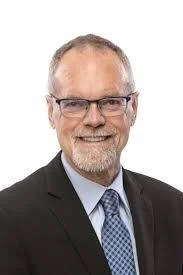
Dr. Bill Andrews
https://sierrasci.com/