What is Integrative Medicine?
Guest : LeNae and Dr. Trip Goolsby
march 7, 2023
Steve Washuta
integrative medicine is a growing trend. What exactly is it? In this episode we will discuss that with LeNae and Dr. Trip Goolsby of your infinite health. We talk about integrative medicine specifics like joint pain procedures, nutritional IVs and exosome, and stem cell regeneration. Additionally, we also talk about the business model, and any advantages to not being as intertwined to insurance as standard medicine is.
Steve Washuta
As always, my mission is to help those of us in the fitness and health careers grow a greater understanding of how others succeed with patients, clients, and business and to also scratch that curious itch about trending Science in Health and Wellness. If you'd like to watch the Monday interviews instead of just listen, please go to YouTube and subscribe Trulyfitapp. You can also follow us on Instagram for updates also Trulyfitapp. And feel free to email me at any time with questions or suggestions. Social@trulyfit.app.
Steve Washuta
Welcome to Trulyfit. Welcome to the Trulyfit podcast where we interview experts in fitness and health to expand our wisdom and wealth. I'm your host, Steve Washuta, co founder of Trulyfit and author of Fitness Business 101, the first four minutes of the recording have a slight background noise issue.
Steve Washuta
Nothing that hinders the conversation. If you're interested in finding out more about the integrative medicine practices we discuss in this episode, please visit your infinite health.com. And now I give you Rene and Dr. trip when I thank you so much for joining the truth a podcast when you give my audience and listeners a little background on who you are, and what you and your company do in the health industry.
LeNae Goolsby
Yeah, well, thank you so much, Steve, for having us on. And I say us because I'm hoping Dr. Trip Goldsby will be coming in any moment. But yeah, so we're the founders of infinite health Integrative Medicine Center. We have two offices in the state of Louisiana, one in the New Orleans area, one in Lake Charles, which is right about a 20 minutes from the Texas border. But we have clients that are across the nation.
LeNae Goolsby
Basically we've focused on like you said health optimization, longevity and regenerative medicine. It's a mouthful. But all those good things, by way of just giving you some background about who we are. My husband, Dr. Trip is actually a board certified medical oncologist and hematologist and was in private practice providing chemotherapy care for probably over 30 years. And about a decade ago, we actually transitioned out of providing cancer care and completely into the integrative medicine approach space.
LeNae Goolsby
So we've been doing this for about a decade now. I have been managing his practice. Since we got married I was voluntold. So that's kind of how I ended up here. I like to say I'm a displaced lawyer having graduated from Tulane Law. But so that's kind of our that's the Redux on the educational component.
LeNae Goolsby
That yeah, so we got into providing health optimization about a decade ago, like I said, and basically for us, that's taking a multi what we call a multipolar approach to looking at somebody's current health status, getting them to conceptualize what their happy end result is, and then tailoring a program specifically for them to get them from where they are to where they want to go.
Steve Washuta
So let's talk a little bit about your patient experience. And I'm sure it's gonna vary, but that's really what I want to talk about, is the average person coming in with one particular issue like, oh, I have this sort of pain or oh, I'm looking to do this, or are they coming to you from like a more, I guess, you would call it holistic approach saying, Hey, I'm just looking to be healthier and live longer? What can you do for me? And then you guys kind of write out a prescription based upon that?
LeNae Goolsby
Yeah, I mean, it really runs the gamut. I think, you know, as in America, we're really acutely from a health perspective of what we don't want. So a lot of us don't take action until the pain becomes unbearable, and change seems better than the pain.
LeNae Goolsby
And so we do have patients who are like, you know, this is my ear, yes. I'm going to take care of myself and really do whatever I need to do to feel younger and healthier again, and then we might run into people who have got multiple chronic issues, stress, anxiety, depression, chronic pain and inflammation. You know, a lot of hormonal imbalances. Those symptoms present themselves in various ways.
LeNae Goolsby
So people are coming in with insomnia or unexplained weight gain, or it really kind of depends on do we have patients who actually come in, you know, from the hole or a holistic approach because they, they intuitively know that they there's something wrong with them, they don't feel the way that they think they should feel that maybe out in the traditional healthcare arena, they've been told they're normal, or they're treated like a number or they're not getting that attention that they desire.
LeNae Goolsby
And so a lot of patients will find us because they understand that what traditional reactive approaches to medicine are no longer working for them. And so we provide a different approach.
Steve Washuta
Okay, so tell me a little bit more about your model in comparison to everyone else. So do you feel like you have a lot of competitors? Are you guys unique to the scene? Is this becoming more of a new thing? I you know, me looking at this, my wife is a physician.
Steve Washuta
And it seems like this isn't a specialty that somebody goes in studies to residency right? That's hence the integrative medicine term, you you're taking a bunch of different specialties or sub specialties and putting them together? Is this is this a new fad? Is this a new thing that's going to be popping up everywhere? Or do you guys think that you're really just kind of new to the scene?
LeNae Goolsby
Well, you know, I think integrative approaches have is not new. They've been around for years. I think the word integrative is kind of trendy and healthcare space right now, and a lot of people use it liberally. I have a very strict definition of what integrative medicine is. I learned it from Dr. Adam Perlman at Duke University, integrative medicine Leadership Development Program.
LeNae Goolsby
And so for us here, integrative medicine is a proactive approach to care that places the patient in partnership, and looks at all those factors that affect health. So emotional, mental, physical, nutritional, environmental, right? For us, specifically, what we do is we look at the best of traditional approaches to care.
LeNae Goolsby
And then we integrate those in with the best of peer reviewed and evidence based complementary therapies. And like I said, we have a multi pillar approach. So when a patient comes to us for whatever their malady may be, we're going to immediately get them to start shifting the way that they're thinking about their challenge, if you will.
LeNae Goolsby
So, you know, like I said, they they know what they don't want, they haven't conceptualized what it is, they do want a lot of the time. So the first question is, okay, here's your intake paperwork, here's, you know, your history, and this is what you're experiencing, that you no longer want to experience. But what does the flip side of that reality look like to you? What is your happy end result? What does that feel like? What would you be doing in that scenario that you're not doing now, so really getting them to start thinking about what it is they want.
LeNae Goolsby
And so from, from the way that we approach things, and our multi pillar approach, really, niches us out, our parameter for what we're looking for, for creating that optimal health and age reversal status, is a really strict parameter. So for example, in other practices, you know, in the traditional setting, they're looking to see if you're normal, because they're looking at the bell curve of what's normal for your age and whatnot.
LeNae Goolsby
But that's not a really good indicator of what that person needs. So we're looking at a one of n or an n of one, I always say it wrong. And we know through epigenetics that we can actually reverse the disease and the aging and the inflammation status to get that person back to where they were when they were at their prime.
LeNae Goolsby
So from a competition perspective, I didn't really look at competition. I you know, we've a little egocentric pool, and that way, we're in our lane, we're doing what we do, we're getting the results, you know, that I think are pretty good. So yeah, don't worry about competition.
Steve Washuta
Yeah. And that that bell curve and those parameters, there's a problem in those I'm certainly no expert in hormones. But I do know about male hormone therapy, we're going to get into female hormone therapy in a second. But, you know, if you go to the doctor, they'll take a range.
Steve Washuta
And typically for males, if you're free, testosterone will be somewhere between, let's say, 209 100. Right. But I can feel great at 250. And someone else could feel terrible at 850. Right? So it doesn't necessarily mean what else is going on? How is that? How is it being used? How is that there's, there's, there's there's more factors than just a quick snapshot of a number and what's going on?
Steve Washuta
I don't think the average person knows that and because the average physician is not letting that on to to the client and patient. I'm sure you guys will talk a little bit about that now leading into it. What sort of lab work do you do when we're talking about these hormone therapies? And and I don't, I don't know anything about female hormone therapy. So if you want to kind of unpack that for me, that'd be interesting.
LeNae Goolsby
Yeah, for sure. We have a very comprehensive lab panel that we have. I know when we first started sending it out to LabCorp and quest and whatnot. The techs over there were like, Oh, my God, this guy's asking for all these blood and the patient's like, oh my god, I was there and they took all these vials of blood.
LeNae Goolsby
So it is very comprehensive, really don't want to go into what it is because it's proprietary, but it is very comprehensive. And when we're done Dealing with somebody who is getting hormone replacement therapy. You know, we're looking at those labs at least quarterly, sometimes six to eight weeks, a year, because we want to make sure that we're getting the right dosing and that things are fluctuating.
LeNae Goolsby
And it's all very experiential, right? Is it serving the patient? Or is it not? Do we need to tweak it or whatnot. So it is a very comprehensive panel for sure. And I think that's, you know, one more thing that sets us apart, because I hear stories all the time about people going and getting, you know, pellets or injections.
LeNae Goolsby
A lot of guys had a guy in yesterday, actually, who was on testosterone therapy, and he wasn't getting his labs done, but maybe once a year, if even that, and he was left to his own education on what his dosing was. So just not a not a not a good way to, to do that. So
Steve Washuta
I've heard horror stories as well about guys who are on it, or maybe they're on like an AI, some sort of aromatase inhibitor to slow things down, and it didn't work well with them. But there was no second step. They weren't like, well, well, you know, what can we do? What's the next step? They're like, Well, tough, this is it.
Steve Washuta
And so we have, we have one particular way in which we go about this, if it doesn't work for you, you have to go somewhere else where other clinics would use, let's say, HCG, or just try a different AI or work with the patient to say, hey, you know, ultimately, this is about you feeling great. And it doesn't matter what the numbers say, if you're telling me that you feel bad, well, we're gonna, we're gonna change this concoction up.
LeNae Goolsby
Right? For sure. I think looking at values consistently is very important, especially when you're on hormones. And for women, I think, you know, we have a lot of women who, if you're over 30, your hormones, your body's not making hormones like they did before you were 30. It's just life.
LeNae Goolsby
But we know how to get those levels back up to where they were when you were peak. And so for a woman, you know, symptoms may be, like I said, unexplained weight gain, insomnia, she is cranky, she has a low libido, she's stressed out at work, you know, all these symptoms may be an indication of a hormonal imbalance.
LeNae Goolsby
So when that woman is coming to us, though, we'll send her off to get that very comprehensive Pianola labs back and then at that second appointment, where we're going through that lab review, we'll go okay, well, this is your history. These are the things you don't want. This is what has come back in the last panel, this is what you say you do want.
LeNae Goolsby
And so now we're going to go through looking at you know, the nutritional component, what kind of foods are you eating? Are they foods that serves your goal or not? Are you exercising? What is it that you can do that you would love to do, because if you hate to run, don't run, you're not going to be successful doing that, right? So let's find something you love.
LeNae Goolsby
Then we're looking at the bioidentical hormone therapy component, which may include, you know, nominal testosterone for a woman estradiol, progesterone, thyroid, most people are thyroid hypothyroid. So all of those are taken into consideration and the dosing it really is dependent upon what serves that patient in that moment. So everything we do is very tailored to that patient. And then all of that is tied to our proprietary Mind Body coaching program. So
Steve Washuta
yeah, I mean, you just, I'm gonna go back to something you just said before about adherence to the program, if they don't like to run, we're not going to tell them that running should be a part of it. But I also like how you're integrating all these things in because it doesn't matter if you're, if all of your hormones are perfect, and you feel great.
Steve Washuta
If you're not taking advantage of that, by exercising by eating healthy, right? If you're if you're still just laying around on the couch and watching Netflix, and you know, and eating ice cream, like you're wasting your money, in a sense, right? Like what, why go to the physician, get everything optimized, only to then not take advantage of your body. And I think not everyone has probably taken that holistic approach.
Steve Washuta
Most people are not I think if you go to your average, let's call it like hormone therapy clinic, they're just looking at a number of panels, they're sending you home with the medicine and that's it, there is no they're not looking at any other aspect of your overall health and wellness where you guys seem to make sure that, you know, you're looking at the full scope and the full spectrum of their health
LeNae Goolsby
what it is very goal and I mean, we're very goal oriented, you know, like, what is your happy end result, like? So, I think that's so important. And I think that might be a missing element and you know, traditional or other approaches is, okay, here's what might be normal for you, and we're gonna get you normal and good luck with that. Here's your vial and here's her syringe.
Steve Washuta
Yeah, unfortunately, that's the way most of it is, is handled, but um, I'm glad to hear that you guys take you know, the not only the next step, but the next three steps and go above and beyond. I saw that you guys do some sort of nutritional infusion related thing. You want to speak to a little bit about that, whether it's the ingredients or maybe when you would use that as opposed to when you wouldn't use that have two people come in and ask for that specifically? Or is that like a part of a, I guess, a larger package?
LeNae Goolsby
Yeah, so well both. We do have people who are familiar with getting the IV infusions. And so they will reach out to us directly, just for that component of care. Maybe they're not, you know, maybe they're younger, and they're still burning their telomeres at both ends. So they've got nothing to lose, but they went out and had Mardi Gras or weekend and so they need to refresh the hydration.
LeNae Goolsby
So yeah, so we do have that clientele. When we're looking for, if somebody has come to us, and they're really focused on reversing their aging process, it may be something that we include in their package, because we can actually do some really exciting things now with X exosome infusions, which are really cool, and really helping people to reverse the aging process. And we can actually track and measure that.
LeNae Goolsby
But generally, if somebody is looking for hydration, or if they're looking to boost their immune response system, you know, we can do high dose vitamin C infusions. If they're looking to feel more vibrant, or eliminate wrinkles, we've got, you know, beauty cocktails, that we can mix together for them as well. So it really kind of once again, depends on what the goal is for that patient as to what kind of concoction if you will, that we'll put together for them. And I think Trip has trip has decided to join us. So,
Dr. Trip Goolsby
right, so how I, how I conceptualize and use IV is not kind of like coming in after you're hungover?
LeNae Goolsby
Well, I told him, we do have patients that do that, literally, since we just got off a Mardi Gras.
Dr. Trip Goolsby
But the real, the real thing for me is, is using using the AI the IVs as a means of metabolic enhancement, for people who and to choose the metabolic pathways to enhance. So for example, somebody needs more ATP or, or, or they have, maybe they have a little anxiety or depression disorder that generally correlates with a number of neurotransmitters that can be they can be enhanced by by using specific specific amino acids and things like that.
Dr. Trip Goolsby
So as I as I, I don't use the IVs as a you know, I use it everyday for you know, getting vitamin C and this and that and the other, I use as a complement to the optimization program that I do with the patients.
LeNae Goolsby
So I was telling him, we were also doing some really exciting things with exosome infusions.
Dr. Trip Goolsby
Uh huh. Yeah, so so they're virtually all of the, all of the end organ diseases, with that result from for example, diabetes or, or atherosclerotic disease, renal failure, liver disease, pulmonary disease, traumatic brain injuries, strokes, all of these things, really benefit from really benefit from actually repair.
Dr. Trip Goolsby
And we have the means to do that. We thought maybe 15 years ago that the stem cells were the way to go, because the stem cells, we thought that they actually transformed themselves into the, into the organ cell that needed to be replaced.
Dr. Trip Goolsby
But in fact, subsequently, we found that there are these little particles inside the stem cells that contain all the growth factors and the cytokines and all of the all the really interesting stuff that activate the pathways to create new cells to create, to create to repair and things like that within the body. And you know, virtually every organ system at this point, at least experimentally, if not in human human use has have demonstrated significant repair capabilities of these, these little nanoparticles that are called exosomes,
Steve Washuta
using that in the in the joint related issues as well, joint inflammation.
Dr. Trip Goolsby
That's kind of where I started actually, but so the musculoskeletal stuff. Yeah, he repairs the cartilage repairs and ligaments and tendons, repairs, the bone repairs, nerves, repairs, all the connective tissue holding the holding the joints together. We just fascinating stuff that actually I got huge success over the last seven or eight years with it.
Dr. Trip Goolsby
So it's been it's been a real eye opener. And so my philosophy at this point has kind of evolved into optimizing all the pathways all the metabolic and repair pathways to you know, set, set back the clock and make people make people to come in, you know, virtually wheelchair bound up Getting them up and getting them active again and getting them back doing the things they love to do. So you don't have
Steve Washuta
like one, just generalized banana bag, you're looking at the person, and you're taking the labs, which are extensive, and you're saying, Okay, you need whatever five HTP and you need vitamin D, and this is what you need. And we're gonna put this together for you. And what you don't need is x y&z You do need a, b, and c, and you're making sure that it's very personalized.
Dr. Trip Goolsby
Yes. And you know, we start I start everybody that comes in with a, I'm not sure if you're familiar with the with the epigenetic aging test that's out there. I'm not, it's fascinating tests that was developed, will probably became available to the public maybe four or five years ago.
Dr. Trip Goolsby
And basically, it looks at the degree of shutdown and methylation of DNA of our DNA about there about 20 million sites, a few. And basically, the methylation of the shutdown has been correlated, there's a correlative graph that actually tells us is linear and correlates with our exact biological age. And so I've been using that test on my on my patients for last couple of few years.
Dr. Trip Goolsby
And we've had some just just amazing results, just by doing the optimization process, not even using the stem cells stuff, we do the optimization process, and we get anywhere from 10 to 2025 years, biological age regression. And it's just, it's been so gratifying.
Dr. Trip Goolsby
And you see that in the patients, the energy and the vibrancy and the, you know, their their focus and their ability to to be more competitive, either in sports or, or be more effective in the workplace. It's, it's just been amazing thing that and it correlates with age regression. And so lengthening of biological life
Steve Washuta
do you deal with I guess you would call it like movement disorder patients? So let's say like a like a Parkinson's ask issues where people coming in is that of some of the stuff that you guys do shown to help them win if not necessarily reverse it, but stave it off.
Dr. Trip Goolsby
Doing one today actually doing a Parkinson's patient today. So I'll use I'll use a combination because na d has been has been proven effective someone in the Parkinson's disease arena, going to be using that plus plus the nanopore nanoparticles in a in a nasal and intravenous infusion.
Steve Washuta
I asked Rene this before but you know, I'll want to get your take on this. Obviously, having integrative medicine you know, that term can be a loaded term. People describe it differently, but you guys are a, you know, a bunch of different sub specialties put together, will this ever just be one specialty? Well, you will be able to go let's say 20 years from now into residency, and and take the proper courses so that you can come out and do exactly what Dr. Tripp does.
Dr. Trip Goolsby
So the thing is right now, right now the it's kind of separate, as you probably know, the musculoskeletal the pm and our physical medicine and rehab domain has you know, has an orthopedics and physical therapy and kind of the the prolotherapy all of those all of those techniques have kind of started out with the very early on using the prolotherapy using which is short for proliferative therapy to make the the joints and the ligaments make those cells proliferate, proliferate and repair.
Dr. Trip Goolsby
And, and so that was kind of one part. But now, as as we've isolated the true cause of the benefit from prolotherapy, we know that the stem cells actually and that goes through that chronology that I discussed the 1515 years ago or so, we thought it was the stem cells converting themselves into the the cells that needed to be there to repair and that but they don't, it's actually the exosomes communicating and changing the the resident stem cells and activating them shutting down the inflammation that prevents them from working and, and then putting them back to work. So all of those things, it's kind of dispersed right now.
Dr. Trip Goolsby
And my philosophy is as I moved out of oncology and into this was Well, first I started first I started with the optimization process. Then I added on to the the musculoskeletal component with my philosophy being I want to I want to address this with the with the making our body do do the work because it's a it's a fantastic machine, make the body do the work and then and do do a repair instead of covering over the symptom so to speak.
Dr. Trip Goolsby
So we let the body do the repair and that has evolved. into all these other, you know, and organ arenas and my, you know, in my mind, if we, if we can, we can continue to repair the damage from you know how we live, basically we get the we get that result and we can not only increase our healthspan, but we actually increase that quality of life that we have even as we get older. So, the
LeNae Goolsby
question was in 20 years, will it
Dr. Trip Goolsby
be? Will it be a substantial
LeNae Goolsby
being able to,
Dr. Trip Goolsby
you know, you know, as she was going over the question, I really wish we can put it together in a in one thing, because I think that, that biological that biological approach making the body work, maybe it's just going to be called medicine.
Steve Washuta
One would hope that there would be, you know, it seems like everyone is is sub specializing and continuing to go into the specialties, rather than what you're doing, putting them together and saying, Well, we have to look at some of these things, you know, in conjunction because they all work together, right? That's, that's how the body works as one, can you talk a little bit more about the joint pain?
Steve Washuta
I guess I would call it like, your average client or patient who comes in with joint pain? Are you talking about people who are weeks away from potentially getting a joint replacement, or somebody who's just maybe running too much and having some small joint related issues? What sort of level of joint issues are we talking about?
Dr. Trip Goolsby
So I've got the entire gamut. I've helped people from from, you know, one example is a father to came in and was doing prolotherapy and PRP early on before I was even doing the stem cells, how to place up and Aspen, his family would go up to Aspen.
Dr. Trip Goolsby
He traveled the world selling antiques. And basically he was in town. He said, I said, Well, why are you here? Why don't you Why aren't you AppScan and Aspen, because he's an avid skier, he says I can't ski anymore because my knees hurt, I do one run, I do a blue, you know, I do a, you know, a blue run. And I, you know, my knees are in so much pain.
Dr. Trip Goolsby
And he wasn't having problems with day to day walking and doing all that. But I said, Look, what that tells us is that you create you're creating inflammation. And that inflammation, we know that osteo arthritis can evolve very rapidly in that type of setting. So I said, Why don't you let me do your knees and, and we'll see how it just see how it goes. And you know, he's well off.
Dr. Trip Goolsby
So he said, Okay, let's do it. And I did it, he kind of got lost to follow up after the next visit. And I guess he came back about six, eight weeks later. And I asked him if he had been overseas on his I don't know, I've been up and Aspen skiing and doing all this stuff. And so so it was very successful. And to this day, he's starting to have this about three or four years later.
Dr. Trip Goolsby
Now, he's starting to have a little bit of discomfort, but I'm just thinking about reopening but, but this is the type of thing starting early in like a runner or somebody who's very active in sports can can preempt the development of bad degenerative disease, and that in that fashion. And so those people who are aware of the technique and its benefits, you know, I highly recommend fine start things early.
Dr. Trip Goolsby
At the other end of the at the other end of the scale, I have people with bone on bone come in with bone on bone, they're weeks away from their from their, you know, total knee, and or hip or other things. And I'll I'll do I'll use probably a little bit more aggressive approach in those patients and with multiple sets of injections, but the results are virtually the same decreased pain, to no pain after three or four sessions with with either the exosomes or basis of the wort and Joey. Yeah,
Steve Washuta
and the exosomes are really the barrel used by anybody this is you're using them, I'm sure there's some other people using them. That's not standard, let's say for your average sports medicine doctor, if I were to go in there using a different substance that has been put into my knee,
Dr. Trip Goolsby
yeah, steroids, they're gonna give you a steroid injection, most of them the vast majority, at this juncture, still using steroids, which had been proven by a number of meta analyses to actually accelerate the development of osteoarthritis. And it's, you know, in my mind, at this juncture,
Dr. Trip Goolsby
I think we shouldn't be giving steroid injections to anybody except somebody who's in excruciating pain and needs that needs that quick fix and then move them quickly into a into a PRP or whatever, you know, byproduct of of the stem cells we can use to to actually correct the inflammation that's in the joint and actually help starting it to repair it. So
Steve Washuta
I feel like there's a there are people doing what you're doing maybe not with the exosomes necessarily but PRP and things of that nature, but I don't know if everybody is doing it the same way. That might be a good thing because you get two documents, let's say a bunch of like we have 50 states they're all independent laboratories.
Steve Washuta
We can see how they work out we pick the best things if you have The 50 Different doctors all using a different sort of exosome PRP ratio, we can see by their patients, which one is the best. And then hopefully we can use that do you have data, you don't have to give it to us that you're recording so that you can look back retroactively and be like, this is the this is the dosage. And this is the components that I put in that work the most effectively.
Dr. Trip Goolsby
So I've evolved, I've evolved over over time, I still use PRP, sometimes as a as a, as a as an expander, volume expander, because it's less expensive than the than the nanoparticle derivatives, and those, so, but I really tending towards using the umbilical cord derivatives much more frequently, at this juncture. And they're much easier to use and actually associated with fewer side effects.
Dr. Trip Goolsby
So So for example, when you use a PRP, for example, you take the patient's blood, you spin it down, you get the you get the platelet enriched fraction, and you use that as the injected. So with a Wharton's jelly there with a Wharton's jelly derivative, so an umbilical cord derivative, you you, you don't have to draw the patient's blood.
Dr. Trip Goolsby
And in fact, the discomfort that's associated with the inflammation after injection of the PRP is virtually voided in, in those patients that are getting a Wharton's jelly, so and the cost is really not that much more. So. So I really try and guide people now into into one of the better derivatives so that they can, they can get that that benefit and not have the discomfort for the next three to seven days after the procedure.
LeNae Goolsby
So are you trapped? But are you tracking and your dosing? And how is your dosing different? Because I know that the way that you administer, like your approach to administering is different than other physicians. And that's why you get the results that you get.
LeNae Goolsby
So there is a he does have a different technique. And I think you're right, it's good that people do it differently, but kind of, it's annoying. Because if you get somebody who goes to somebody who does it maybe in a way that doesn't get the outcome that that patient could have received, then that patient is walking away feeling like, oh, I tried that, and it didn't work, when maybe had they gone over here, it would have been they would have had a completely different result. And I think patients don't, they don't have the information to ask the questions that they might want to be asking.
Steve Washuta
I should clarify, it's only it's only good in the beginning of the process until we figure out who has the best process. And then we just exclusively use that best process. But like you said, we are in the beginning of this. And because of that, some patients are going to say, Oh, I did PRP, I got nothing out of it.
Steve Washuta
Well, some doctors shoot nothing in there, they just literally want liquid in there right to, like you said to expand and maybe that'll help for six weeks, but it's not going to help for six months, you're gonna have to go back in. Right. So having having a better, you know, model like you do with the exosome seems to be maybe what we're looking at moving forward.
Dr. Trip Goolsby
And I think I think the the the technique I use is more directed at injecting, very specifically the the ligaments, the tendons, the intra articular, I mean, going around the joint and injecting very specifically in those areas that and loading those areas up with the with the with the injectate.
Dr. Trip Goolsby
And allowing that to go to work, most people that are doing it are that stem from the PA Menara and orthopedic domain, I think, are still using a single, intra articular injection. And that's it. And I think that probably could be a result for, you know, more compromised outcome,
Steve Washuta
either more of a business related question here, is it? Do you find it advantageous or a disadvantage, to not have everything covered by insurance? Meaning, if tomorrow I can tell you every single thing that you do is covered by insurance? Would you want that? Or is that oversight actually sort of a bad thing for your business model?
LeNae Goolsby
I hate insurance. Insurance companies are practicing medicine, it's highly inappropriate. They're deciding what a patient should and should not receive. And they're arguing with a physician's medical decision via for example, estradiol or even thyroid, natural thyroid medicines that we would deem appropriate for a patient we'll get letters all the time for an insurance company saying this isn't covered.
LeNae Goolsby
We don't have the data that says that this is what this patient needs are not on our formulary not on our formulary. So I mean, in my in my happy place. We don't have insurance except for maybe major medical, you know, accidents and things of that nature. I had listened to like Dave Ramsey, or somebody talking about insurances, you know, it was never like As I said it was never intended to keep you healthy.
LeNae Goolsby
It was intended to help you in urgent accident, you know, catastrophic situations. That is what insurance was designed for. And we've just completely wild manipulated it. Yeah. It's it's just, it's just out of control. I think it's an inappropriate use of of power. But that's another podcast problem.
Steve Washuta
Yeah, well, you know, no, unfortunately, the general public, if they are paying for insurance, sometimes they decide, well, that's my cap in how I'm going to treat my health and wellness. So I'm spending x amount of dollars a year. And that's, but that's not preventative, right?
Steve Washuta
That's, that's sort of critical care, ask, you know, so they need to, they need to step up and say, Hey, I was talking about this, if you're worried about your wealth, you should be worried about your health, you want to save for retirement, you're not gonna be able to use that money in retirement, you're not gonna be able to take that trip to Italy, because you're gonna be in a wheelchair.
Steve Washuta
So you know, spend the money on yourself go out, it doesn't matter if your insurance covers a procedure, like, you know, Dr. Trip is doing or not, if you have the painting, if if you're worried about your long term health, you have, you have to be worried about preventative care. And I'm glad you guys do such a good job of that from again, I hate this word holistic.
Steve Washuta
Because it you know, it reminds people of going out in the woods and taking, you know, plants off trees and rubbing them all over themselves. It's not that it's just that we know that the whole body is interconnected. So you know, one thing matters. And then everything's interconnected. You make one decision somewhere, there's there's going to be some repercussions somewhere else.
Steve Washuta
And what are we looking at, I have so many patients who were on, let's say, 10 medications, because once you're on one, you continue to be on more and more and more, but none of them ask how they work, right? So I go up to I go to my patient, say, Do you know how your cholesterol medication works? They have no idea.
Steve Washuta
Because it just gets rid of my cholesterol. Oh, that's not exactly how it works. So you know, it's it's just, it's really good and enlightening and fun to hear that there's there's people out there with business models like yours, who are really looking at the the overall health and wellness of their of their patients and clients.
LeNae Goolsby
Yeah, yeah. And I, you know, even our team, I, when you ask our team member, what they love about working for us, like everybody here loves to see somebody coming in, you know, compromised, and then watching the evolution of that patient, like their whole disposition and their whole outlook changes.
LeNae Goolsby
You know, we've seen patients who come in and not only just take the information and apply it to their health, but they start to take the information and they apply it to their relationships, they start to apply it to what they're doing at work.
LeNae Goolsby
And so all these other aspects of their health, which also impact our you know, of their life, which impact our health are being improved upon. And it's a really exciting, from an observer perspective, it's really exciting to see that kind of transformation taking place. I
Steve Washuta
think it's a great sort of pitch, though. And an advantage for you guys to be able to say to a patient, someone like me say, Hey, Steve, not only do we not only have 15 minutes, like rabbits positioned us to sit down with you, and then I'm out because of this burn and churn insurance related thing, but also I can make the best decision based upon your health, not based upon what the insurance company is going to tell me we can do or not do.
Steve Washuta
I just am looking at the medicine looking at your body and making a decision. We're going to do it now. Yeah, you might have to cough up a little bit more dough. But But ultimately, this is the best plan for you. I'm not just making a decision based upon what I know the insurance company is going to approve. And if you're somebody really cares about your health, that's a huge, that's a great pitch. It's a big advantage to meet a consumer.
LeNae Goolsby
Yeah, well, that would be our ideal client.
Steve Washuta
Well, this has been fantastic information. Thank you so much Dr. Trip and we'll Neyland. Why don't you tell us where people can find you specifically, if they want to reach out to you guys have questions, websites, Instagram, whatever it's best to find you guys.
LeNae Goolsby
Yeah, probably the easiest way to reach out is just go to the website. And that is yourinfinitehealth.com. In you know, we have a free discovery call with one of our wellness coordinators that they can sign up for subscribe to the newsletter, which I'm very inconsistent with but my heart goes into it every time I actually do it. But again, yourinfinitehealth.com
Steve Washuta
LeNae, Dr. Trip, thank you so much for joining the Trulyfit podcast. Thank you so much. Thank you so much for listening in. And remember, you can subscribe to Trulyfitapp on YouTube to watch the Monday interviews. See you guys soon.
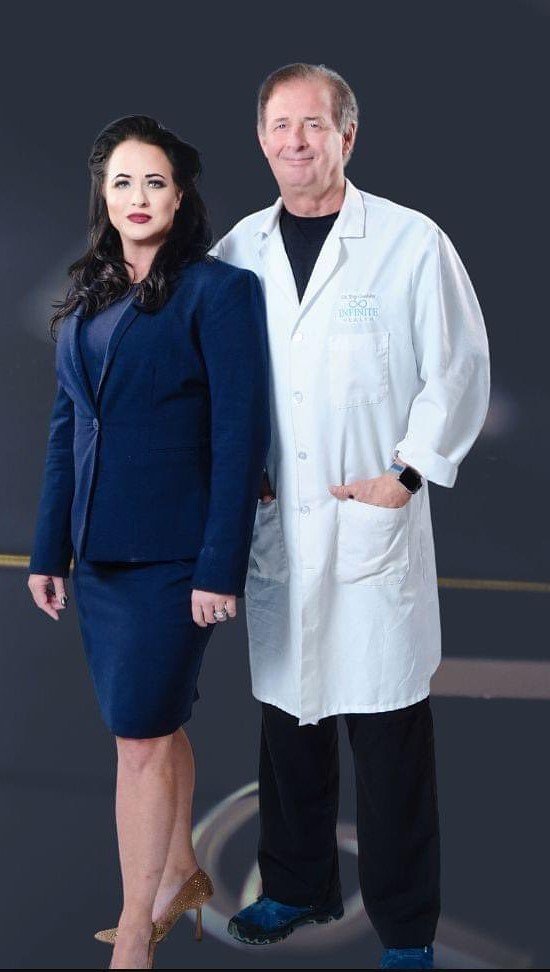
LeNae and Dr. Trip Goolsby
Website: https://www.yourinfinitehealth.com/
IG: @your.infinite.health